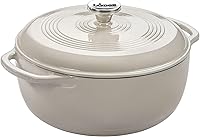
Amazon Basics 6 Qt Enameled Dutch Oven Review: Worth It? (October 2026)
The Amazon Basics Dutch oven in 6 qt is the best fit here for everyday family stews, braises and baking. Choose it if you cook for 4–6 people and can comfortably lift and hand wash heavy cast iron.
On this page (7 sections)
- Is the Amazon Basics 6 Qt Dutch Oven right for your kitchen?
- Which alternative size or finish should you choose?
- How should you choose capacity, fit and finish?
- How do you set up and cook with the enameled pot?
- What care prevents common enamel mistakes?
- How does it compare with Lodge and other Dutch ovens?
- Should you buy the Amazon Basics Dutch oven?
The Amazon Basics Dutch oven in 6 qt is the best fit here for everyday family stews, braises and baking. Choose it if you want an enameled pot for meals serving 4–6 people and can manage heavy cookware at the sink.
The main buying decision is size and finish. Smaller households can save weight with the compact model, batch cooks get more room in the larger enameled pot, and experienced cast iron cooks may prefer the pre-seasoned version.
Is the Amazon Basics 6 Qt Dutch Oven right for your kitchen?
The 6 qt enameled model suits regular family cooking better than either size extreme. It has enough capacity for varied meals without committing you to the largest pot in this group.
Amazon Basics 6 Qt Enameled Dutch Oven

- 6 qt capacity
- Enameled cast iron
- Oven safe to 500°F
- Hand wash only
Choose this middle size for family stews, braises and meals with leftovers. Its enamel cooking surface avoids the seasoning routine of bare cast iron.
Pros
- Capacity suited to family cooking
- Enamel needs no seasoning
- Works for roasting, sautéing and baking
Cons
- Heavy to lift when full
- Needs hand washing and gentle utensils
Its cast iron body and lid suit slow cooking, where stored heat helps maintain a steady simmer. Amazon Basics says the construction distributes heat evenly and retains heat for roasting, baking and sautéing.
Use it for dishes that move through several stages: brown meat, soften vegetables, add liquid, then cover for a braise. One pot can handle those steps, provided you control the heat rather than leaving the burner high throughout.
The main drawback is its 13.1 lb empty weight. Food adds to that load, so think about the move from stove to oven and from counter to sink before choosing it.
Skip this model if lifting heavy cookware is difficult or you need dishwasher cleanup. A pot that stays in the cabinet because it's awkward to handle is the wrong fit, even when its capacity matches your recipes.
What the 6 qt Amazon Basics Dutch oven size is best for
Choose this size when your normal cooking includes a family dinner, a pot of soup with leftovers or a covered roast with vegetables. It offers more flexibility than buying a small pot around an occasional side dish.
Capacity doesn't tell you whether a particular cut of meat will fit flat. Check the food's shape as well as its volume, especially for long roasts that may suit an oval vessel better than a round one.
Our guide to Dutch oven sizes explains how to match capacity to portions, leftovers and the dishes you cook most.
Which alternative size or finish should you choose?
Choose the smaller enameled pot for modest batches, the larger one for cooking ahead, or pre-seasoned iron if you prefer its care routine. Moving up in size gives you capacity, not a reason to change the meals you actually make.
The smaller enameled pot for meals without excess leftovers
Amazon Basics 4.3 Qt Enameled Dutch Oven

- 4.3 qt capacity
- Enameled cast iron
- Oven safe to 500°F
- Hand wash only
A smaller choice for meals serving 3–4 people without a large batch of leftovers. Choose it when your usual recipes fit comfortably inside its capacity.
Pros
- Suited to smaller batches
- Lighter than the larger enameled options
- No seasoning routine
Cons
- Less room for guests or meal prep
- Still heavy for its size
- Hand wash only
The 4.3 qt model suits meals serving 3–4 people, according to Amazon Basics. It's a sensible choice for a couple who want some leftovers or a smaller household making stew, beans or a compact casserole.
Its 11.2 lb weight makes it lighter than the other enameled pots here, but it still requires a firm two-handed grip. Choose it for manageable batch sizes rather than expecting lightweight saucepan handling.
Skip it if you regularly double recipes, host guests or freeze several portions from each meal. Crowding a small pot leaves less room to stir, and browning meat may require more rounds.
If your household is small but you cook large batches every weekend, choose around that routine. The number of people at the table matters less than the amount you cook at once.
The larger enameled pot for cooking ahead
Amazon Basics 7.3 Qt Enameled Dutch Oven

- 7.3 qt capacity
- Enameled cast iron
- Oven safe to 500°F
- Hand wash only
Choose this larger enameled pot for meals serving 6 or more and recipes intended for leftovers. Its extra capacity brings more weight to handle during cooking and cleanup.
Pros
- Room for larger meals
- Enamel needs no seasoning
- Suited to cooking ahead
Cons
- Heaviest enameled option here
- Needs more storage space
- Hand wash only
The 7.3 qt enameled model suits meals serving 6 or more, according to Amazon Basics. Choose it for larger soups, stews and braises when a smaller pot would leave you splitting one recipe between vessels.
The extra room also helps when ingredients are bulky before cooking down. Still, leave space below the rim for stirring and simmering instead of treating full capacity as a working fill line.
At 16.3 lb empty, this is the heaviest enameled option here. Make sure your sink, storage shelf and lifting routine suit it before choosing the larger size.
Skip it if most dinners are small and you rarely save leftovers. Extra capacity won't improve a modest batch enough to justify handling a heavier pot every time you cook.
The pre-seasoned pot for an established cast iron routine
Amazon Basics 7 Qt Pre-Seasoned Dutch Oven

- 7 qt capacity
- Pre-seasoned cast iron
- Oven safe to 500°F
- Hand wash only
Choose this bare cast iron option if you already prefer cooking with a seasoned surface. It needs regular seasoning care and does not provide a non-stick function.
Pros
- Room for substantial batches
- Fitted cast iron lid
- Suited to an established cast iron routine
Cons
- Needs seasoning maintenance
- Pre-seasoned finish is not non-stick
- Must be dried promptly after washing
The 7 qt pre-seasoned model suits cooks who already like bare cast iron and accept regular seasoning care. It has a fitted lid and is intended for braising, baking and slow cooking.
Its finish does not provide a non-stick function. Use suitable cooking fat, allow food to brown before trying to move it, and expect to maintain the seasoned surface over time.
Skip it if you want the simplest care routine or often cook long-simmered tomato dishes. Acidic food can affect seasoning during extended cooking, making enamel the more practical choice for that pattern.
Pre-seasoned means the starting surface is prepared, not that maintenance is finished. Prompt drying and a very thin coat of oil when needed belong in your cleanup routine.
How should you choose capacity, fit and finish?
Choose by your usual recipe, your lifting comfort and your care habits, in that order. An occasional holiday meal shouldn't decide the size of a pot you'll use for ordinary dinners.
Start with the amount you actually cook
Think about your last few soups, stews or braises. If they fit comfortably in a medium pot, sizing up mainly adds handling weight; if you often divide a batch, more room has a clear purpose.
Leave headroom for bubbling and stirring. A recipe that nearly fills a pot before adding meat or vegetables needs a larger vessel, even if its liquid volume looks manageable.
Bread requires a separate fit check. Match the dough size, finished loaf shape and recipe method to the pot rather than assuming any Dutch oven capacity suits every loaf.
Check the route from storage to sink
Measure the storage space and oven clearance, allowing room for the lid and your oven mitts. Also check that you can reach both handles without bumping a neighboring pan.
Consider how you'll empty leftovers before washing. Ladling food into storage containers reduces the load you need to carry, and lifting the lid separately can make handling easier.
On a smooth cooktop, lift cast iron instead of dragging it. Center the pot over an appropriately sized cooking zone and follow the cooktop's cookware guidance.
Choose enamel if you want to avoid seasoning
Enamel separates food from the bare iron cooking surface and doesn't need routine seasoning. That makes it a practical fit for cooks who rotate between tomato sauces, soups and covered braises.
It still needs careful handling and isn't a promise of stick-free cooking. For more help with the finish, read our enameled cast iron Dutch oven buying guide.
How do you set up and cook with the enameled pot?
Start with washing, drying and a clear lifting plan, then use gradual heat. All 4 pots here have a 500°F oven limit, so check the entire recipe before starting, including any bread-baking or finishing stage.
Wash the enameled pot and lid with warm, soapy water before first use, then rinse and dry them. You don't need to season the enamel cooking surface.
Put an oven rack where you can reach the handles without tipping the pot. Set out dry mitts and a stable, heat-resistant landing place before the cookware becomes hot.
Build heat gradually and brown in batches
For stovetop cooking, begin with low to medium heat and increase only as needed. Cast iron stores heat, so a high burner can leave the pot hotter than intended even after you turn it down.
Add cooking fat as your recipe directs and give ingredients space. If meat releases a pool of liquid, work in smaller batches so it can brown rather than steam.
Don't pry food loose with a metal tool. Give it time to form a crust, then use a wooden or suitable silicone utensil to turn it.
Keep braises gentle and check moisture
Once you've added liquid, bring it to a gentle simmer rather than a hard boil. Covered cooking reduces evaporation, so start with the recipe's liquid amount and check it during a long cook.
Remove the lid near the end only when you need to reduce the sauce. Keep hands and face clear of escaping steam, and remember that both lid and handles remain hot.
Our guide to using a Dutch oven for the first time walks through the basic cooking sequence in more detail.
What care prevents common enamel mistakes?
Let the pot cool before washing, then use warm, soapy water and gentle tools. Amazon Basics calls for hand washing and advises against citrus-based cleaners and metal utensils.
A soft sponge is the starting point for ordinary cleanup. If food has dried onto the enamel, soften it with warm water after the pot has cooled instead of scraping with a knife.
Avoid pouring cold water into a very hot pot. A sudden temperature change can stress enamel, and it also turns a simple cleanup into a splash hazard.
Dry the pot and lid before storage. If you stack cookware inside, place a soft protector between pieces to reduce hard contact with the enamel.
The most common cooking mistake is using extra heat to solve slow browning. Give the pot time to warm, dry the food's surface and reduce crowding before turning up the burner.
The most common cleaning mistake is treating stuck food as a reason for stronger scraping. Our guide to cleaning an enameled Dutch oven covers gentler ways to loosen residue.
Don't move this model to the dishwasher to save effort. Read whether Dutch ovens are dishwasher safe if you're comparing care requirements across finishes.
How does it compare with Lodge and other Dutch ovens?
Compare usable size, lifting weight and finish care before choosing a brand. The Amazon Basics model fits a clear need: a medium enameled pot for family cooking with hand-wash care.
There isn't enough reason to choose one brand solely because both pots carry the same quart label. Handle access, storage fit and the way you cook deserve a place in the decision.
Our Amazon Basics vs Lodge 6 qt comparison looks at those alternatives side by side. Read the Lodge 6 qt review if that model is on your shortlist.
The Overmont review gives you another option to weigh. For a wider shortlist, use our best Dutch ovens guide.
If budget is the main filter, start with our best budget Dutch ovens guide. Favor a pot you can use and maintain comfortably over extra capacity you rarely need.
Should you buy the Amazon Basics Dutch oven?
Buy the 6 qt enameled Amazon Basics Dutch oven if family stews, braises and oven meals are part of your regular cooking. Its main commitment is handling and hand washing a heavy pot after each use.
Choose the smaller enameled version for modest batches, or the larger one when cooking ahead regularly stretches your current pot. Pick pre-seasoned iron only if you prefer that surface and will keep up with its care.
If weight or sink cleanup already sounds inconvenient, keep comparing before buying. Our guide to budget Dutch ovens can help you narrow the next choice around your cooking routine.
Frequently asked questions
Is the Amazon Basics 6 Qt Dutch Oven oven safe?
Yes, the Amazon Basics 6 Qt Enameled Dutch Oven is oven safe up to 500°F; keep the full recipe within that limit, including any final uncovered cooking step. Use dry oven mitts for the handles and lid, and clear a heat-resistant landing spot before moving the pot.
How many people does the 6 qt Amazon Basics Dutch oven serve?
Amazon Basics recommends the 6 qt model for serving 4–6 people; actual portions depend on the meal: a main-course stew and a side dish use capacity differently. Choose around the recipes you cook most, leaving room to stir and simmer rather than planning to fill the pot to its rim.
Can you put the Amazon Basics enameled Dutch oven in the dishwasher?
No, the Amazon Basics enameled Dutch ovens need hand washing with warm, soapy water; let the pot cool before cleaning, and avoid citrus-based cleaners, metal utensils and harsh scraping. For stuck food, soften the residue before wiping it away rather than trying to scrape it off with a sharp tool.
What is the difference between the enameled and pre-seasoned models?
The enameled models have a coated cooking surface that needs no seasoning, while the pre-seasoned model needs regular seasoning maintenance. Both require hand washing; choose enamel for frequent tomato-based braises and stews; choose pre-seasoned iron if you prefer that surface and will dry and oil it as needed.