10 Best Dutch Ovens (October 2026)
The best best Dutch ovens include the Lodge 6 Qt Enameled Dutch Oven for everyday cooking, the Overmont 5.5 Qt Enameled Dutch Oven for smaller family meals, and the Le Creuset 5.5 Qt Round Dutch Oven for watching food brown.
On this page (10 sections)
- How we chose the best Dutch ovens
- Best Dutch ovens compared
- Which Dutch oven is right for your kitchen?
- How do you choose the best Dutch oven size?
- Should you choose round or oval?
- Is enameled or seasoned cast iron right for you?
- What should you check before the first meal?
- Which cooking mistakes should you avoid?
- How do you clean and store a Dutch oven?
- Which is the best Dutch oven for your kitchen?
The best Dutch oven for most kitchens is the Lodge 6 Qt Enameled Dutch Oven because it covers everyday soups, braises and baking without requiring a seasoning routine. Choose a different model when your meals call for less capacity, larger batches, outdoor use or an oval cooking space.
Start with the food you make each week, then check how comfortably you can lift and store the pot. A larger vessel only helps if it fits your cooking habits and kitchen.
Our Dutch oven size guide helps narrow capacity. The guide to Dutch oven shapes and sizes explains round versus oval, while the enameled cast iron buying guide covers finish and care choices.
Our picks at a glance
-
1
-
2

-
3

- 4
 Check it
Amazon Basics 6 Qt Enameled Dutch Oven
Best for occasional one-pot meals - 5
 Check it
Le Creuset 7.25 Qt Round Dutch Oven
Best for frequent entertaining - 6
 Check it
Lodge 7 Qt Cast Iron Dutch Oven
Best for indoor-outdoor cooking - 7
 Check it
Overmont 7 Qt Enameled Dutch Oven
Best for weekend meal prep - 8
 Best for dedicated braise cooksCheck it
- 9
 Check it
Lodge 7 Qt Oval Enameled Dutch Oven
Best for long roasts - 10
 Check it
Tramontina Bestow 5.5 Qt Dutch Oven
Best for moderate-heat oven meals
How we chose the best Dutch ovens
We favored useful capacity, clear cooking limits and practical care requirements over decorative details. LoyalLadle compared the supplied specifications and features, including material, shape, cooktop support, lids and handles.
The order reflects each pot's fit for a broad search, so a specialist choice can sit below an everyday option. The seasoned Lodge, for example, serves outdoor cooks better than an enameled pot intended for indoor meals.
A higher score doesn't make a pot right for every household. Narrow the choices by meal size and cooking method before comparing the details that separate similar models.
Best Dutch ovens compared
Choose capacity and finish first, then compare weight, oven limits and shape. Most picks cover the same core jobs, so a feature only deserves extra weight if it changes how you'll cook.
| Product | Best for | Capacity | Shape | Material | Our score |
|---|---|---|---|---|---|
| Lodge 6 Qt Enameled Dutch Oven | everyday cooking | 6 qt | Round | Enameled cast iron | 9.1 |
| Overmont 5.5 Qt Enameled Dutch Oven | smaller family meals | 5.5 qt | Round | Enameled cast iron | 8.8 |
| Le Creuset 5.5 Qt Round Dutch Oven | watching food brown | 5.5 qt | Round | Enameled cast iron | 8.6 |
| Amazon Basics 6 Qt Enameled Dutch Oven | occasional one-pot meals | 6 qt | Round | Enameled cast iron | 8.5 |
| Le Creuset 7.25 Qt Round Dutch Oven | frequent entertaining | 7.25 qt | Round | Enameled cast iron | 8.3 |
| Lodge 7 Qt Cast Iron Dutch Oven | indoor-outdoor cooking | 7 qt | Round | Seasoned cast iron | 8.2 |
| Overmont 7 Qt Enameled Dutch Oven | weekend meal prep | 7 qt | Round | Enameled cast iron | 8.1 |
| Staub 7 Qt Round Cocotte | dedicated braise cooks | 7 qt | Round | Enameled cast iron | 8.0 |
| Lodge 7 Qt Oval Enameled Dutch Oven | long roasts | 7 qt | Oval | Enameled cast iron | 7.9 |
| Tramontina Bestow 5.5 Qt Dutch Oven | moderate-heat oven meals | 5.5 qt | Round | Enameled cast iron | 7.6 |
A moisture-returning lid can help keep condensation inside a covered dish, but it doesn't remove the need to watch liquid levels. For bread, the recipe's heat requirements may matter more than lid ridges or bumps.
Which Dutch oven is right for your kitchen?
The Lodge enameled round pot is the broadest everyday choice, while the other picks address more specific needs. Each recommendation below includes a reason to choose it and a reason to pass.
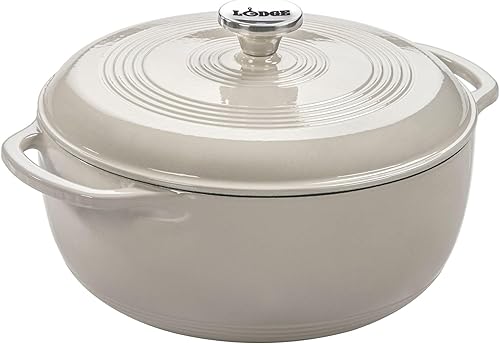
Lodge 6 Qt Enameled Dutch Oven
- 6 qt capacity
- Round enameled cast iron
- Oven safe up to 500°F
- Hand washing recommended
Our first choice for a kitchen that needs one pot for soups, braises and baking. The enamel surface needs no seasoning.
Pros
- Useful capacity for regular meals
- Compatible with induction
- Suitable for acidic ingredients
Cons
- Heavy at 14.9 lb
- Hand washing is recommended
Choose the Lodge if you want one main pot for regular dinners rather than cookware reserved for special recipes. It moves between stovetop browning, covered oven cooking and serving, making it useful for a stew or a Sunday braise.
The enamel can handle acidic ingredients, so tomato sauces and wine-based cooking fit its role. You don't need to build or maintain a seasoned cooking surface.
Its dual handles deserve as much attention as its cooking uses. At 14.9 lb before food, this is a substantial lift, especially when moving a full pot from an oven to a counter.
Skip it if heavy cookware already makes cooking difficult, or if you usually make only a couple of portions. For everyone else, its middle-ground capacity makes it easier to justify than a larger pot bought for rare gatherings.
Overmont 5.5 Qt Enameled Dutch Oven
- 5.5 qt capacity
- Condensation bumps inside lid
- Oven safe up to 500°F
- Includes cookbook and cotton handle covers
A match for family dinners when you rarely need a large batch pot. The lid returns condensation to food, and enamel needs no seasoning.
Pros
- Compatible with induction
- Moisture-returning lid
- Includes cookbook and handle covers
Cons
- Hand washing is required
- Less room for meal prep than larger picks
The smaller Overmont suits family dinners without large leftovers. Overmont describes it as suitable for 3 to 5 people, although a chunky main dish and a light soup won't produce the same number of servings.
Condensation bumps inside the lid return collected moisture to the food. That's useful for covered cooking, but you still need enough liquid and a gentle cooking temperature to keep a braise from drying out.
The cookbook provides recipe ideas, and cotton handle covers come with the pot. Keep those covers dry and use heat protection suited to the task whenever you move hot cookware.
Choose this model if dinner usually ends with a few portions left, rather than several freezer containers. Skip it if you routinely double recipes, and use our 5 to 6 quart Dutch oven picks to compare everyday capacities.
Le Creuset 5.5 Qt Round Dutch Oven
- 5.5 qt capacity
- Light-colored enamel interior
- Compatible with all cooktops
- Ergonomic handles and knob
The pale interior helps you judge browning and see cooking residue clearly. Choose it for regular meals rather than large weekend batches.
Pros
- Light interior helps monitor cooking
- Compatible with all cooktops
- Dishwasher safe
Cons
- Less capacity than larger family pots
- Still substantial at 5.1 kg
Choose the smaller Le Creuset when seeing browning clearly matters to your cooking. Its light enamel interior makes changes in onions, butter and browned residue easier to follow before you add liquid.
That visibility is useful when building a sauce in stages. You can watch the bottom while adjusting heat instead of relying only on smell or the color of the food itself.
The handles and knob are designed for easy lifting, but the pot still weighs 5.1 kg. Check that you can get a secure grip with bulky oven mitts rather than assuming a smaller capacity means easy handling.
Skip it if you need a large meal-prep vessel or want a pot that feels light when full. Our premium Dutch oven guide can help if you're comparing higher-end cookware around interior finish and handling.
Amazon Basics 6 Qt Enameled Dutch Oven
- 6 qt capacity
- Round enameled cast iron
- Oven safe up to 500°F
- Hand wash only
A straightforward choice for occasional stews, roasts and baking. It suits cooks who want basic Dutch oven functions without choosing around extra lid features.
Pros
- Room for family-size recipes
- Oven safe up to 500°F
- Lighter than the round enameled Lodge
Cons
- Hand washing is required
- Avoid citrus-based cleaners and metal utensils
The Amazon Basics pot suits occasional stews and oven meals when you want a straightforward enameled vessel. It covers roasting, baking and stovetop cooking without making a special lid design central to the choice.
At 13.1 lb, it weighs less than the round enameled Lodge, although neither is light once filled. That difference may help with handling, but it shouldn't replace checking your grip and storage location.
Its care instructions are clear: hand wash with warm, soapy water, avoid citrus-based cleaners and keep metal utensils away from the enamel. A wooden spoon or suitable silicone tool is a practical match.
Choose it if your recipes need a conventional family-size pot and you're comfortable washing it by hand. Skip it if confirmed induction support is essential; our Lodge 6 Qt vs Amazon Basics 6 Qt comparison explains the everyday choice more closely.
Le Creuset 7.25 Qt Round Dutch Oven
- 7.25 qt capacity
- Light-colored enamel interior
- Compatible with all cooktops
- Dishwasher safe
Extra capacity suits hosts who regularly make large soups and braises. The pale interior helps you monitor browning before adding liquid.
Pros
- Room for larger gatherings
- Compatible with all cooktops
- Requires no seasoning
Cons
- Bulky for small meals
- Heavy at 6.1 kg
The larger Le Creuset is for cooks who regularly feed guests or want dinner plus several future meals. Extra room helps when stirring a large soup or arranging ingredients for a covered braise.
Its light interior supports the same browning checks as the smaller version. The larger capacity earns its place when you use that room regularly, rather than only for an annual celebration.
At 6.1 kg empty, it requires a clear route from stove to oven and a stable place to set it down. Plan to serve or portion food near the cooking area if carrying a full pot would be awkward.
Skip it if most of your recipes make small amounts, since you'll store and wash the larger vessel every time. The Le Creuset 5.5 qt model is the more focused choice for regular meals with fewer leftovers.
Lodge 7 Qt Cast Iron Dutch Oven
- 7 qt capacity
- Seasoned cast iron
- Oven, stovetop, grill and campfire use
- Fitted cast iron lid
Choose this seasoned pot when cooking on a grill or campfire is part of the plan. Its surface needs drying and seasoning care after washing.
Pros
- Indoor and outdoor cooking options
- Fitted cast iron lid
- Seasoned with natural oil
Cons
- Requires seasoning care
- Heavy at 17.6 lb
Choose the seasoned Lodge for cooking that extends to a grill or campfire. That indoor-outdoor role sets it apart from the enameled choices in this guide.
Its iron-and-oil cooking surface needs a different routine after meals. Wash it by hand, dry it promptly and maintain a thin seasoning layer rather than treating it like enamel.
The 17.6 lb empty weight makes carrying distance a real consideration. For outdoor cooking, plan a stable cooking area and a safe landing place before heating the pot.
Skip this model if you mainly want long tomato-based simmers with minimal surface upkeep. Acidic food can affect seasoning during prolonged cooking, so enamel is the simpler fit for that routine.
The guide to enameled Dutch ovens explains that alternative if indoor meals and easier surface care matter more than outdoor flexibility.
Overmont 7 Qt Enameled Dutch Oven
- 7 qt capacity
- Condensation bumps inside lid
- Oven safe up to 500°F
- Includes cookbook and cotton handle covers
A large enameled option for soups, stews and meals divided into future portions. Buy it when extra capacity will earn regular use.
Pros
- Room for batch cooking
- Compatible with induction
- Includes cookbook and handle covers
Cons
- Hand washing is required
- Heavy at 6.9 kg
The larger Overmont is a good match for weekend cooking divided into future meals. Choose it when your normal routine includes a large stew, several lunch portions or dinner for a bigger household.
Overmont describes this size as serving 5 to 8 people. Use that as a broad guide, then judge by your own recipes, portion sizes and room needed for stirring.
Its condensation bumps return moisture during covered cooking, and the enamel needs no seasoning. The included cookbook and cotton handle covers are useful extras, but capacity should drive the decision.
At 6.9 kg empty, it calls for careful lifting and a convenient storage spot. Skip it if you rarely fill a smaller pot or struggle to wash bulky cookware in your sink.
If bread is the main reason you're buying, our best Dutch ovens for sourdough bread focuses on that use.
Staub 7 Qt Round Cocotte
- 7 qt capacity
- Matte black enamel interior
- Lid spikes return condensation
- Compatible with all stovetops
The matte interior and spiked lid suit cooks who often brown ingredients before a covered braise. Choose a pale interior instead if seeing color changes is your priority.
Pros
- Matte interior designed for browning
- Lid spikes return moisture
- Works on induction
Cons
- Heavy at 15.2 lb
- Hand washing is recommended
Choose the Staub if browning followed by a covered braise is a regular part of your cooking. Staub designs its matte black enamel interior for browning, while spikes inside the lid return condensation to food.
The dark surface creates a different cooking experience from pale enamel. If you prefer watching small color changes in browned residue, one of the light-interior choices will suit you better.
This is still enameled cookware, so a dark interior doesn't call for the seasoning routine used on bare cast iron. Gentle cleaning and protection from sudden temperature changes remain useful habits.
Pay attention to the lid when planning oven use: its limit is 500°F, even though the uncovered pot has a higher limit. Skip it if the 15.2 lb empty weight makes handling impractical.
Our Staub vs Le Creuset comparison explores the interior and lid differences between those choices.
Lodge 7 Qt Oval Enameled Dutch Oven
- 7 qt capacity
- Oval enameled cast iron
- Oven safe up to 500°F
- Compatible with induction
The oval shape makes room for elongated roasts and loaves. Choose it for food shape rather than capacity alone.
Pros
- Accommodates longer foods
- Fitted lid retains moisture
- Compatible with induction
Cons
- Heavy at 17.9 lb
- 15.7-inch overall length needs storage room
Choose the oval Lodge when the length of your food is the reason a round pot feels cramped. An elongated roast or loaf can use an oval cooking space more naturally.
The shape matters most during oven cooking, where heat surrounds the vessel. On a round burner, the ends extend farther from the heat source, so allow gradual heating and watch the food while browning.
Its 15.7 x 11.45 x 6.28-inch overall dimensions deserve a shelf and oven check before you buy. Leave room to reach both handles safely rather than measuring only whether the pot fits.
At 17.9 lb empty, this is the heaviest choice here. Skip it for mostly soups and stews unless the oval shape solves a regular problem.
If you mainly brown shallow layers of food, our Dutch oven vs braiser guide may point you toward a more suitable shape.
Tramontina Bestow 5.5 Qt Dutch Oven
- 5.5 qt capacity
- Off-white enamel interior
- Self-basting lid ridges
- Oven safe up to 450°F
A useful fit for braises and baked meals that stay within its oven limit. The pale interior and condensation ridges support everyday covered cooking.
Pros
- Light interior helps monitor food
- Compatible with induction
- Lid ridges return condensation
Cons
- 450°F oven limit
- Hand washing is required
The Tramontina suits braises and baked meals at moderate oven temperatures. Its off-white interior helps you follow browning, and condensation ridges under the lid direct collected moisture back into the pot.
Its 450°F oven limit is the main buying filter. Check your favorite bread recipe before choosing it, since a hotter covered bake would fall outside that limit.
At 11.9 lb, it is lighter than several larger options here, but still needs a secure two-handed grip when full. Its integral handles and stainless steel knob provide the lifting points.
Choose it when your usual recipes fit the temperature limit and you want a pale interior in an everyday capacity. Skip it if high-heat bread baking is the main job.
Our Dutch oven care guide covers the cleaning and use habits that help protect enamel.
How do you choose the best Dutch oven size?
Choose 5.5 to 6 qt for regular meals and step up only when larger recipes are part of your routine. Count the portions you actually cook, including planned leftovers, rather than choosing from household size alone.
A pot needs room above the food for stirring and bubbling. Filling it to the rim makes it harder to mix ingredients and move the vessel safely.
The best Dutch oven for your weekly routine
Start with your 3 most common recipes and the amounts you normally make. If they're modest soups, stews and braises, an everyday pot is more useful than a large vessel bought around an occasional holiday meal.
For meal prep, consider the finished volume plus vegetables and meat added during cooking. For roasts, shape and usable interior space matter alongside total capacity.
A bigger pot doesn't automatically mean faster browning. Large batches may still need several rounds so meat has room to contact the cooking surface.
Read our Dutch oven size guide before deciding whether extra capacity will earn regular use.
Should you choose round or oval?
Choose round for most stovetop meals and oval when long foods are a frequent part of dinner. A round base generally lines up more closely with a round burner.
An oval pot can solve a food-fit problem without requiring you to cut a roast into smaller pieces. It also takes more shelf length and can crowd nearby cookware on the stove.
For either shape, compare the base with your burner and leave space to reach the handles. Our guide to Dutch oven sizes and shapes explains those tradeoffs in more detail.
Is enameled or seasoned cast iron right for you?
Choose enamel for indoor cooking without seasoning upkeep, or seasoned cast iron when outdoor use and a renewable seasoned surface fit your habits. Enamel is also the simpler choice for frequent acidic dishes.
Neither finish makes food impossible to scorch or stick. Heat control, enough cooking fat when needed and patience during browning still matter.
Enamel needs protection from hard knocks and harsh scraping. Seasoned cast iron needs prompt drying and occasional oiling, especially after washing removes some of its protective surface.
For a closer look at the finish, read the complete enameled Dutch oven guide.
What should you check before the first meal?
Wash, inspect and arrange a safe lifting route before heating a new Dutch oven. Check the rim, cooking surface and lid for damage, then read the care instructions for the complete pot.
Make sure the lid is seated securely and that your oven mitts let you grip both handles. Set out a heat-safe trivet before cooking so you aren't searching for somewhere to put a hot vessel.
For stovetop meals, build heat gradually rather than starting with maximum power. Cast iron holds heat, so give it time to respond before turning the burner up again.
Use a recipe suited to the pot's size for the first meal. Our first-time Dutch oven guide walks through preparation and basic cooking steps.
Which cooking mistakes should you avoid?
Avoid excess heat, crowded browning and sudden temperature changes. Those habits affect dinner and cookware more than decorative finish or lid styling.
Brown meat in batches and let excess surface moisture dry before it goes into the pot. Crowding releases water faster than it can escape, pushing the food toward steaming.
Once a stew reaches a simmer, reduce the heat to maintain gentle bubbling. A hard boil can break up ingredients and reduce liquid faster than intended.
Check covered braises occasionally rather than assuming a moisture-returning lid prevents dryness. Bread recipes need their own heat and preheating plan, so follow the cookware instructions before heating an empty enameled pot.
Keep hot handles covered only with dry protection when carrying. Wet fabric can transfer heat quickly, and a filled pot deserves both hands and a clear path.
How do you clean and store a Dutch oven?
Let the pot cool before washing, then use gentle cleaning tools suited to its finish. Even when a model allows dishwasher use, hand washing gives you more control over contact with the enamel.
For stuck food on enamel, start with warm water and a soak rather than forceful scraping. Use a soft sponge or nylon brush and avoid metal tools that can damage the surface.
Our enameled Dutch oven cleaning guide explains the next steps when a simple wash isn't enough.
Dry seasoned cast iron promptly and apply a very thin coat of oil when needed. Store either finish dry, and add a protective layer between stacked cookware so hard surfaces don't strike the enamel.
Which is the best Dutch oven for your kitchen?
Choose the best Dutch oven around your most frequent meal. Pick the Lodge enameled round pot for general cooking, a smaller model for modest dinners or a larger round pot for regular meal prep and guests.
Choose the oval Lodge for long roasts and the seasoned Lodge for grill or campfire use. Favor Le Creuset's pale interior for visible browning checks, or Staub's matte interior and spiked lid for a braise-focused routine.
Before ordering, confirm the oven limit, empty weight and storage fit. The Dutch oven size guide is the useful next step if you're still deciding between everyday capacity and a larger batch pot.
Our top 3 picks at a glance
-
1
-
2
-
3
Frequently asked questions
What size Dutch oven works for most kitchens?
A 5.5 to 6 qt Dutch oven is a useful starting point for everyday soups, stews and braises. Choose more capacity if you regularly cook for guests or freeze extra portions.
Leave space for stirring and check the pot's weight, since a full pot is harder to move.
Should you choose a round or oval Dutch oven?
Choose a round Dutch oven for most stovetop cooking and an oval one for long roasts or loaves. A round base generally aligns better with a round burner.
An oval pot can fit elongated food more easily, but it needs extra shelf space and careful burner placement.
Is enameled or seasoned cast iron easier to care for?
Enamel is simpler if you don't want a seasoning routine. Wash it gently, avoid sudden temperature changes and use utensils that protect the coating.
Seasoned cast iron needs prompt drying and a thin coat of oil when needed. Neither finish benefits from being left wet or scrubbed carelessly.
Can you use these Dutch ovens on induction?
Both enameled Lodge pots, both Overmont pots, both Le Creuset pots, Staub and Tramontina support induction. Confirm compatibility for the Amazon Basics model and seasoned Lodge before buying either for that purpose.
Match the base to your cooktop's required size, center the pot and lift it instead of sliding it.
How do you choose between a 5.5 qt and 7 qt Dutch oven?
Choose 5.5 qt for regular meals and 7 qt for frequent larger batches. A larger pot helps with extra portions, but it adds lifting and storage demands.
Consider your usual recipe volume, room for stirring and how often you actually want leftovers before choosing the larger size.


