Are Dutch Ovens Dishwasher Safe?
Some Dutch ovens are dishwasher safe, including certain enameled cast iron models. Wash bare cast iron by hand, and hand wash enamel when your model's care instructions are unclear.
On this page (8 sections)
- Are Dutch ovens dishwasher safe?
- Which pot should you buy if cleanup matters?
- What care does a Lodge enameled Dutch oven need?
- How do you hand wash enamel without damaging it?
- Can a bare cast iron Dutch oven go in the dishwasher?
- How should you load a dishwasher-safe Dutch oven?
- How should you dry and store a Dutch oven?
- Are dishwasher-safe Dutch ovens the right choice for you?
Some Dutch ovens are dishwasher safe, but bare cast iron needs hand washing. For enameled pots, the answer depends on the exact model and its care instructions.
If machine cleaning is a buying requirement, choose a pot with clear dishwasher permission before considering color or shape. If you already have one, check its supplied instructions before loading it.
Enameled cast iron has a glass-like coating over the iron, while bare cast iron relies on seasoning. A dark cooking surface can be either, so color alone won't identify the material.
Are Dutch ovens dishwasher safe?
Some enameled Dutch ovens allow dishwasher cleaning; bare cast iron does not. Permission can also differ between models from the same brand.
The Le Creuset round pot and Staub round cocotte below allow machine washing. Guidance conflicts for the Lodge and Staub pumpkin models, making hand washing the sensible choice unless their supplied instructions clearly permit otherwise.
A dishwasher-safe label doesn't mean machine washing is the best daily care routine. Detergent can gradually dull enamel, and a heavy pot needs room to sit securely without striking other dishes.
Check the lid and knob as well as the pot. Instructions for one part shouldn't be treated as permission for every component.
For help identifying the coating, see our guide to enameled cast iron Dutch ovens.
Which pot should you buy if cleanup matters?
Choose clear care instructions first, then match capacity and weight to your meals. A pot that fits your dishwasher but feels awkward to lift won't make cleanup easier.
Measure usable rack space with nearby plates in place, allowing room for both the pot and lid. Check your sink too, since even a dishwasher-safe Dutch oven may need soaking or occasional hand cleaning.
For meal planning, our Dutch oven size guide helps you choose capacity before comparing finishes.
Which enameled Dutch ovens are dishwasher safe?
The Le Creuset round and Staub round models below permit machine washing. Their different capacities and interiors make them useful for different cooking routines.
Le Creuset: for everyday meals and a light interior
Choose this pot if you want dishwasher permission plus an interior that makes cooking progress easy to see. Its round shape suits soups, stews, and other one-pot meals.
The enamel needs no seasoning, and the pot works on all cooktops, including induction. Its handles and knob are designed for easier lifting, though you should still check that you can grip them securely with oven mitts.
A light interior helps you watch browned food and residue as they develop. It doesn't remove the need to loosen stuck food before washing.
Skip it if your main need is a large batch pot or a small serving vessel. For a wider range of capacities and designs, compare our best Dutch ovens.
Staub round cocotte: for larger batches
Choose this cocotte for batch cooking when you want machine washing available as an option. Its larger capacity suits soups and braises you plan to divide into several meals.
The textured black enamel interior is designed for browning, and spikes under the tight-fitting lid return condensed moisture to food. It works on all stovetops, including induction.
At 15.2 pounds before food, it calls for a comfortable lifting route between stove, sink, and storage. Remove the lid separately and let both pieces cool before cleaning.
Skip it if lifting heavy cookware is difficult or your dishwasher rack has limited clearance. The dark interior also makes subtle changes in browning less obvious than on a light surface.
Staub pumpkin cocotte: for smaller meals and table serving
Choose the pumpkin cocotte if you want a smaller cooking pot that also serves as a table centerpiece. Its shape and Burnt Orange finish are reasons to pick it over a plain round pot.
The black matte enamel interior is designed for browning, while the lid's spikes return moisture to the food. Its smooth enamel base works on all stovetops, including induction.
The smaller capacity doesn't make it light: it weighs 12.3 pounds. Consider how you'll hold the pot while rinsing it and where the shaped lid will rest safely.
Skip it if regular dishwasher cleaning is essential or you need room for large batches. Its care guidance includes both dishwasher permission and a hand-wash-only instruction, so plan on cleaning it by hand.
For food-contact questions, read are enameled Dutch ovens safe?.
What care does a Lodge enameled Dutch oven need?
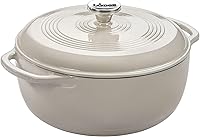
Hand wash this Lodge model unless the instructions supplied with your pot clearly allow machine washing. Its care guidance includes both dishwasher-safe and hand-wash-only directions.
Choose this pot for family meals if you're comfortable with a regular hand-wash routine. It supports stovetop cooking, including induction, and can move into an oven up to 500°F.
Its enamel surface suits acidic ingredients, so tomato sauces and marinades don't require the seasoning care of bare iron. Dual handles give you a grip on both sides for moving it.
At 14.9 pounds, it's worth checking sink clearance and storage height before buying. A low shelf can be easier to manage than lifting a heavy pot into an overhead cabinet.
Skip it if clear dishwasher permission is your deciding feature. For burnt-on food, use the steps in our guide to cleaning a burnt Dutch oven instead of scraping harder.
How do you hand wash enamel without damaging it?
Cool the pot, soften residue, then clean with mild soap and a soft tool. Most routine cleanup doesn't need harsh scrubbing.
Let the pot cool naturally before adding warm water. Cold water poured into hot cast iron can cause a sudden temperature change that stresses the enamel.
Wash with a soft sponge or nylon brush, paying attention to the rim and underside of the lid. Avoid steel wool, metal scraping, and abrasive pads.
If food sticks, soak the cooled enameled pot until the residue loosens. Don't use a knife to pry food from the cooking surface.
Preventing stuck food also helps: use controlled heat and avoid letting sauces boil dry. Cast iron holds heat, so raising the burner sharply can make food catch before you expect it.
Our guide to cleaning an enameled Dutch oven covers the next steps when a normal wash leaves marks.
Can a bare cast iron Dutch oven go in the dishwasher?
No, keep bare cast iron out of the dishwasher. Detergent and long exposure to water can damage seasoning and leave exposed iron vulnerable to rust.
Wash it promptly by hand with warm water and a suitable brush or scraper. A little mild dish soap is generally suitable, but follow the pot's own care directions.
Don't leave bare iron soaking while you clean the rest of the kitchen. Dry it right away and apply a thin coat of oil when the care instructions call for it.
New users can start with how to use a Dutch oven for the first time, which explains the difference between enamel care and seasoning.
How should you load a dishwasher-safe Dutch oven?
Load it securely with enough clearance for spray and drainage. Use the cycle, detergent, and rack position allowed by both the cookware and dishwasher instructions.
Remove loose food first, and soften stubborn residue rather than expecting a longer cycle to remove everything. Keep the lid separate so water can reach both surfaces.
Check that the pot doesn't block a spray arm or the detergent dispenser. Don't wedge it between dishes or stack other heavy cookware against its enamel.
Inspect the finish during cleanup. If the cooking surface has a chip or crack, stop cooking with the pot and contact the brand for guidance.
When instructions are missing or conflict, choose hand washing. A machine cycle shouldn't be the way you find out whether a pot is suitable.
How should you dry and store a Dutch oven?
Dry the pot and lid fully before storage, including their rims and handle joints. Water left around exposed iron can lead to rust.
Towel-dry after hand washing or remove any water that remains after a permitted dishwasher cycle. Don't close a damp lid over the pot.
Store both pieces dry, with the lid slightly ajar if practical. If stacking cookware, use a soft separator to prevent hard contact with the enamel.
Avoid storing a heavy Dutch oven where removing it requires an awkward reach. Keep its lid separate if that makes lifting easier.
Are dishwasher-safe Dutch ovens the right choice for you?
Choose dishwasher permission if it solves a real cleanup need, then check capacity, lifting weight, and rack fit. Hand washing remains a useful routine even for pots that permit machine cleaning.
Pick the Le Creuset round pot for everyday meals and a light interior, or the Staub round cocotte for larger batches. Choose the Lodge or Staub pumpkin only if you're comfortable planning around hand washing.
Bare cast iron always belongs in the hand-wash routine. For enamel with stubborn food, start with our enameled Dutch oven cleaning guide before reaching for a stronger scrubber.
Frequently asked questions
Are enameled Dutch ovens dishwasher safe?
Some enameled Dutch ovens are dishwasher safe, including the Le Creuset round pot and Staub round cocotte here. Care guidance conflicts for the Lodge and Staub pumpkin models, so hand wash those pots unless the instructions supplied with your exact pot clearly allow machine washing.
Can a bare cast iron Dutch oven go in the dishwasher?
No, wash a bare cast iron Dutch oven by hand. Dishwasher detergent and prolonged water exposure can harm its seasoning and leave the iron vulnerable to rust, so use a brush or scraper, dry it promptly, and follow its care instructions for oiling.
Does the dishwasher damage enameled cast iron?
Machine washing can dull an enamel finish over time, even when a pot is dishwasher safe. Hand washing also reduces contact with other dishes and lets you target stuck food gently; follow the care instructions for your exact pot, and avoid abrasive tools or sudden temperature changes.
How should I dry a Dutch oven after washing?
Dry the pot completely with a soft towel, including the rim, handles, and underside of the lid where water can linger. Prompt drying helps protect exposed iron from rust; for bare cast iron, follow the care instructions for applying a thin coat of oil before storage.