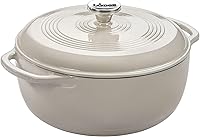
Enameled Cast Iron Dutch Oven Buying Guide
An enameled cast iron Dutch oven is a covered pot for braising, simmering and baking without seasoning. Start with 5.5 to 6 qt for everyday family meals, then choose by weight, cooking surface, cooktop fit and care needs.
On this page (10 sections)
- What makes an enameled cast iron Dutch oven different?
- Which Dutch oven size fits your cooking?
- Which shape works best for your recipes?
- What features should you compare before buying?
- Four 5.5 to 6 qt pots to compare
- How should you set up a new Dutch oven?
- How do you brown, braise and bake without common mistakes?
- How do you care for enameled cast iron?
- How did LoyalLadle choose these examples?
- Which enameled cast iron Dutch oven should you choose?
An enameled cast iron Dutch oven is a covered pot for braising, simmering and baking without a seasoning routine. A 5.5 to 6 qt round model is a useful starting point for everyday family meals.
Choose capacity around your normal recipes, then check whether you can lift, wash and store the pot comfortably. A larger pot adds little value if its weight keeps you from using it.
The four examples below suit different priorities: Lodge for general cooking, Le Creuset for watching browning, Amazon Basics for straightforward oven meals and Overmont for covered cooking with included accessories.
What makes an enameled cast iron Dutch oven different?
An enameled cast iron Dutch oven combines heat-holding cast iron with a coated cooking surface. Its deep body and fitted lid support long, gentle cooking, while the enamel removes the need to season the cooking surface.
Cast iron warms more slowly than thin cookware and stays hot after you lower the burner. That helps maintain a simmer, but it also means you should make heat adjustments early.
The enamel provides a barrier between food and the iron underneath. It suits acidic dishes such as tomato sauce without the seasoning concerns that come with prolonged acidic cooking in bare cast iron.
Enamel is not a nonstick coating. Meat can stick before a crust forms, and starch can catch on the bottom if you use too much heat or leave a thick dish unstirred.
Enameled cast iron Dutch oven or bare cast iron?
Choose enameled cast iron for sauces, stews and low-maintenance cooking surfaces. Bare cast iron suits cooks who want an uncoated surface and are willing to maintain its seasoning.
The tradeoff is surface care: enamel needs protection from impacts, harsh scraping and sudden temperature changes. You cannot restore a chipped enamel cooking surface by adding seasoning.
Choose another type of pot if your main need is quick boiling, fast temperature changes or easy one-handed lifting. A Dutch oven earns its space through covered cooking and heat retention, rather than speed.
What should you expect from the weight?
Plan for the filled weight, not just the empty pot. Broth, meat and vegetables add a substantial load, especially when you carry dinner from a low oven rack.
The Le Creuset weighs 5.1 kg, about 11.2 lb; Amazon Basics weighs 13.1 lb; Lodge weighs 14.9 lb. Those differences matter if lifting is your main concern, though all remain heavy cookware.
Check that your oven mitts fit through or around the handles without forcing your fingers against the hot body. Remove the lid separately when practical, and clear a landing spot before lifting.
Which Dutch oven size fits your cooking?
Start with 5.5 to 6 qt for a general-purpose family pot, then size up or down around the food you actually cook. Your most common recipe matters more than an occasional holiday meal.
A soup needs room for liquid, ingredients and stirring. A roast needs enough length and width to sit inside, while bread needs space for the dough to expand.
| Capacity | Consider it for | Main tradeoff |
|---|---|---|
| About 3 to 4 qt | Smaller meals, sides and compact batches | Less room for bulky ingredients or leftovers |
| 5.5 to 6 qt | Family soups, braises and everyday one-pot meals | Still heavy when filled |
| 7 qt or more | Frequent batch cooking and larger recipes | More space needed for cooking, washing and storage |
Serving counts are rough guides because a bowl of soup and a portion of braised meat use capacity differently. Leave room below the rim for stirring and bubbling rather than treating the full capacity as usable cooking volume.
A half-quart difference is usually less important than shape, handle clearance or lifting comfort. Avoid choosing between these four pots on capacity alone.
Match the pot to a real recipe
Use a recipe you make often as your size check. Note the recommended pot capacity and whether the meal needs depth, a broad base or room around a large piece of food.
If you regularly split a stew between two pots, more capacity may solve a real problem. If you mainly cook small portions, a larger Dutch oven can leave a shallow layer of liquid that reduces too quickly.
For more help choosing capacity, see our Dutch oven size guide. It is especially useful if you are deciding whether a family-size pot is more than you need.
Measure beyond the cooking capacity
Measure the storage space with handles and lid included. The opening of a cupboard can be tighter than the shelf behind it, and an oven door must close without pressing against the pot.
Also check your sink and drying area. A pot that fits the burner but cannot sit securely in the sink makes routine washing awkward.
Use our guide to Dutch oven sizes when comparing capacity ranges, and our how to choose a Dutch oven guide for the broader fit checks.
Which shape works best for your recipes?
Choose round for a general-purpose Dutch oven, oval for ingredients that need extra length, or a braiser for wider, shallower cooking. Shape changes the usable cooking area even when two pots hold similar amounts.
Round pots work naturally over common round burners. They suit soups, beans and stews because the ingredients can spread through the depth rather than needing one broad layer.
Oval pots can hold a long roast more comfortably, but their ends may extend beyond a round heating zone. Rotate or manage the food as needed during stovetop browning, then use the oven for surrounding heat.
A braiser gives meat and vegetables more room across the base. Its shallow sides also make it easier to turn pieces and let moisture escape when reducing a sauce.
Choose a Dutch oven when depth is the priority and a braiser when cooking area is the priority. Our Dutch oven vs braiser comparison explains that choice in more detail.
What features should you compare before buying?
Compare fit, lifting comfort and cooking limits before color. These decide whether a pot works in your kitchen; the finish color mainly decides how it looks there.
Use this short checklist to rule out poor matches before comparing smaller features:
- Cooking space: Enough depth and base area for your usual recipes.
- Outside dimensions: Room on the stove, in the oven and in storage.
- Handles: A secure grip with thick, dry oven mitts.
- Cooktop approval: Compatibility with your exact stove type.
- Oven limits: Suitable limits for the body, lid and knob.
- Care routine: Cleaning instructions you are willing to follow.
Interior color and lid design
A light interior helps you see the difference between browned cooking residue and residue that is starting to burn. That is useful when you build a sauce from the bits left after searing.
A fitted lid slows moisture loss during a braise, but it does not remove the need to check the liquid. Lid bumps or steam-return features cannot rescue a dish cooked too hot or too long.
Buy for the way you cook rather than a promised result from one feature. A visible cooking surface helps with browning; a covered pot helps with moisture control; neither replaces heat management.
Cooktop and oven compatibility
For induction, confirm approval for the exact model and use a cooking zone suited to its base. On glass surfaces, lift the pot rather than dragging it.
The oven limit applies to the assembled cookware, including its lid and knob. Accessories such as handle covers are separate items and should not be assumed safe at the pot's temperature limit.
High-heat bread recipes deserve special attention because they may call for empty preheating. Follow the pot's own instructions even when a recipe uses a different method.
Four 5.5 to 6 qt pots to compare
Choose Lodge for general cooking, Le Creuset for a visible interior, Amazon Basics for simple oven meals, or Overmont for its lid and accessory bundle. All four are round, so this group does not address cooks who need an oval shape.
These are practical examples within one size range, rather than four completely different kinds of cookware. The useful differences are handling, care, cooking-surface visibility and included features.
Lodge 6 Qt Enameled Dutch Oven
Choose the Lodge for family soups, tomato-based braises and stove-to-oven meals when you are comfortable lifting a heavy pot. Its general-purpose design makes sense as the main covered pot in a kitchen.
It works on gas, electric, ceramic and induction cooktops and is oven safe up to 500°F. Dual handles give you a grip on each side for moving it with both hands.
Lodge describes the enamel as nonreactive with acidic ingredients. That makes it a useful choice for a tomato-rich stew or wine-based braise without maintaining a seasoned cooking surface.
Choose hand washing with warm, soapy water and a nylon brush. Lodge's care directions differ on dishwasher use, and hand washing follows the more cautious route.
Skip it if lifting is your main concern. Its empty weight is the highest among the three models with weights provided here, so food and a trip into the oven deserve serious thought.
It also makes little sense for a cook whose main task is browning many pieces in one layer. A wider, shallower pan would address that need more directly than extra depth.
Le Creuset 5.5 Qt Round Dutch Oven
Choose the Le Creuset if watching browning and handling the pot are your priorities. Its light-colored interior helps you monitor cooking residue before you add liquid for a sauce.
The handles and knob are designed for easy lifting. It is also the lightest of the three examples with provided empty weights, though you should still plan to move it with both hands.
Le Creuset describes the tight-fitting lid as designed to circulate steam and return moisture to food. Its tall sides help contain splashes when stirring a sauce or simmering a stew.
It works with all cooktops, including induction, and permits dishwasher cleaning. The supplied oven guidance conflicts, so confirm the exact pot-and-lid limit before planning high-heat baking.
Skip it if your main need is more cooking room. This capacity remains close to the other examples, so the brand alone does not solve overcrowding or make it the right pot for larger batches.
Its clearest fit is a cook who often browns food, builds sauces and values the lighter empty weight. Those are more useful reasons to choose it than color alone.
Amazon Basics 6 Qt Enameled Dutch Oven
Choose Amazon Basics for straightforward stews, roasting and oven meals if you are happy to hand wash. It offers the same general family-size role without an accessory bundle driving the choice.
The cast iron body holds heat for covered cooking, and the pot is oven safe up to 500°F. Amazon Basics describes its capacity as suitable for 4 to 6 people, depending on the meal.
Use warm, soapy water for cleaning, and avoid citrus-based cleaners and metal utensils. Choose wood or suitable silicone tools so you can stir and lift food without scraping the enamel.
Skip it if dishwasher cleaning is essential. Also confirm cooktop compatibility before choosing it for induction, since that approval is not established in the information supplied here.
It suits a cook who needs a basic covered oven pot and already has mitts, a trivet and recipes. Avoid treating the absence of extra accessories as a cooking drawback if those items are already in your kitchen.
Overmont 5.5 Qt Enameled Dutch Oven
Choose Overmont for covered family meals and a starter bundle. Its lid has condensation bumps, and the set includes a cookbook, silicone mat and 2 pot holders.
Overmont describes the bumps as collecting steam and returning moisture to the food. That feature fits braises and stews, where a covered cooking environment is useful.
The pot works on gas, electric, ceramic and induction cooktops and is oven safe up to 500°F. It requires hand washing, and its enamel cooking surface needs no seasoning.
Skip it if a confirmed empty weight is essential to your choice. Obtain that figure before ordering if lifting comfort is the deciding factor, and do not assume the accessories make a heavy pot easier to carry.
The bundle suits someone setting up a kitchen or adding their first Dutch oven. If you already have suitable holders and a trivet, focus on the pot and lid rather than counting the extras as necessary upgrades.
How should you set up a new Dutch oven?
Before the first meal, inspect, wash and plan where the hot pot will go. A clear stove, stable oven rack and heat-safe landing spot make the first use easier.
Check the inside cooking surface, rim, handles and lid for shipping damage. Return a pot with chips on the food-contact surface rather than trying to cover the damage with oil.
Wash it with warm water and dish soap, rinse well and dry it. An intact enamel cooking surface does not need a seasoning cycle.
Put the oven rack at a height that leaves room for the lid and lets you lift without reaching far into the oven. Set out dry mitts and a trivet before you begin cooking.
Start with a forgiving recipe
A soup or simple braise is a useful first meal because it lets you learn how slowly the pot responds to heat changes. Begin below the burner setting you would use for thin cookware.
Watch for a gentle simmer rather than a rolling boil. Once the cast iron is hot, you may need less burner heat to maintain that simmer.
Avoid making empty, high-heat preheating your first task. Bread methods vary, so establish what the pot permits before following a recipe that calls for a very hot empty vessel.
Our guide to using a Dutch oven for the first time walks through the cooking sequence in more detail.
How do you brown, braise and bake without common mistakes?
Use moderate heat, enough cooking room and gradual temperature changes. Most avoidable problems come from overheating the pot or asking its base to hold too much food at once.
A Dutch oven keeps heat well, but it still needs time to warm. Turning the burner to maximum does not make every part of the pot heat evenly at once.
Brown meat in batches
Pat meat dry, add the cooking fat your recipe calls for and leave space between pieces. Crowding traps steam and slows browning even when the pot has enough total capacity for the finished dish.
Let a crust form before trying to turn the meat. If it resists lifting, give it a little more time rather than scraping hard against the enamel.
After browning, reduce the heat and add liquid carefully while the pot remains warm. Use a wooden or suitable silicone utensil to loosen the browned bits without harsh scraping.
Keep a braise at a gentle simmer
Add the recipe's liquid, cover the pot and check that the food is simmering gently. A hard boil can reduce liquid too fast and make delicate ingredients break apart.
A tight lid still allows some moisture to escape, so check long cooks. Add warm liquid if needed rather than allowing the base to become dry.
Remove the lid near the end if the sauce needs to reduce. Stir more often as the liquid thickens because a concentrated sauce can catch on the hot bottom.
Treat bread as a separate use case
For bread, match the loaf size and baking method to the pot's capacity and care limits. The lid needs room above the dough, and the whole pot must fit the oven safely.
Do not assume a general oven limit also approves prolonged empty preheating. Follow the cookware instructions for that step and for any parchment you use.
If bread is your main reason for buying, compare the options in our Dutch ovens for sourdough bread guide. A pot chosen mainly for stews may not be your preferred shape for loading dough.
Avoid sudden hot-to-cold changes
Let the pot cool before washing, and never pour cold water into a very hot, nearly dry vessel. Put hot cookware on a suitable trivet rather than a cold or wet surface.
Do not move a refrigerated pot straight onto strong heat. Follow its care directions for warming it gradually, and transfer food to another vessel when that is more practical.
How do you care for enameled cast iron?
Clean an enameled Dutch oven with warm water, dish soap and gentle tools after it cools. Treat stuck food with soaking rather than stronger scraping.
For everyday cleanup, a soft sponge or nylon brush is usually enough. Wash the lid as well, then dry the pot and any exposed iron around the rim before storing.
Hand washing is required for Amazon Basics and Overmont and is the cautious choice for Lodge. Le Creuset permits dishwasher cleaning, though hand washing keeps a heavy pot from occupying much of the rack.
Handle stuck food without grinding it away
Soak the cooled pot in warm, soapy water, then try the soft brush again. Avoid steel wool, metal scraping tools and harsh abrasive powders.
For stubborn residue, use only a cleaner or method approved for the enamel. Mixing cleaning chemicals or reaching for a stronger tool can create more trouble than the original food residue.
Our enameled Dutch oven cleaning guide covers routine care. For a scorched meal, follow the more specific guide to cleaning a burnt Dutch oven.
Separate discoloration from surface damage
A stain can change the interior's appearance without creating a chip. Aim for a clean surface rather than scrubbing aggressively to restore its original color.
Stop using a pot with chipped or flaking enamel on the cooking surface and seek the manufacturer's advice. Do not attempt to season over that damage.
Dry the pot fully before closing it for storage. If you stack cookware, place a soft protector between pieces so another pan cannot strike or scrape the enamel.
How did LoyalLadle choose these examples?
We compared capacity, shape, provided weights, lid features, cooktop approval and care directions. The examples show useful buying differences within a common family-size range.
We kept product claims tied to their brands and did not treat condensation features as a promise of better results. Heat, liquid level and recipe choice still control the meal.
Where instructions conflict, the advice favors gentle cleaning and confirmation before high-heat use. Missing compatibility or weight details matter when they affect a reader's ability to use the pot.
Which enameled cast iron Dutch oven should you choose?
Choose an enameled cast iron Dutch oven by the meal and lifting task it must handle, then use the smaller features to break a close decision. Skip the category if weight or slow heat response conflicts with your daily cooking.
- Choose Lodge for a main family pot for soups and acidic braises when its weight is manageable.
- Choose Le Creuset when a light interior and the lowest provided empty weight matter most.
- Choose Amazon Basics for straightforward oven meals when hand washing fits your routine.
- Choose Overmont when covered cooking and the included starter accessories suit your kitchen.
Before ordering, name the first 3 meals you will cook and decide where the pot will live. That short check is more useful than buying extra capacity for a meal you rarely make.
For more options beyond these family-size examples, use our best Dutch ovens guide to compare pots against the needs you have identified.
Frequently asked questions
What size enameled cast iron Dutch oven should I get?
Start with 5.5 to 6 qt for everyday family meals, then compare that capacity with your usual recipes. Smaller pots suit sides and compact meals, while larger pots give bulky ingredients more room; check the outside dimensions and empty weight before choosing, since handles, storage and lifting matter too.
Do enameled cast iron Dutch ovens need seasoning?
No, the enamel cooking surface does not need seasoning; wash and dry the pot before its first use, then cook with oil or other fat as your recipe requires. Avoid metal scraping tools and sudden temperature changes, and follow any separate instructions for exposed cast iron edges.
Can an enameled Dutch oven go on an induction cooktop?
Yes, an enameled cast iron Dutch oven can work on induction when its manufacturer approves that use. Match the base to a suitable cooking zone and start with moderate heat rather than a boost setting; lift the pot when moving it across the glass, and check compatibility for the exact model.
What is the difference between a Dutch oven and a braiser?
A Dutch oven has taller sides for soups, stews and deeper batches, while a braiser is wider and shallower for browning and cooking food in a layer. Choose around the meals you make most often; a large liquid capacity does not always mean a large flat cooking surface.
How do you clean an enameled Dutch oven?
Let the pot cool, then wash it with warm water, dish soap and a soft sponge or nylon brush. Soak stuck food before scrubbing, and avoid metal scraping tools or harsh abrasives; follow the brand's directions for dishwasher use, allowed cleaners and drying any exposed iron around the rim.