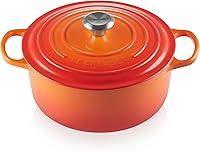
Are Enameled Dutch Ovens Safe?
Yes, enameled Dutch ovens are generally safe with an intact cooking surface when used as directed. Stop cooking if interior enamel chips or flakes, and contact the manufacturer.
On this page (8 sections)
- Are enameled Dutch ovens safe for everyday cooking?
- What should you do if the enamel chips?
- How can you protect the enamel while cooking?
- Does enamel make a Dutch oven safer than bare cast iron?
- Which enameled Dutch oven suits your cooking routine?
- How should you set up a new enameled Dutch oven?
- How should you clean an enameled Dutch oven?
- Are enameled Dutch ovens safe enough for your kitchen?
Yes, enameled Dutch ovens are generally safe for cooking when their interior enamel is intact and you follow the manufacturer's instructions. Stop cooking in a pot with chipped or flaking interior enamel, and contact the manufacturer.
Enamel is a glass-like coating over cast iron, so it needs protection from impacts and sudden temperature changes. Choosing a pot you can lift, heat, and clean comfortably matters as much as choosing its capacity.
Are enameled Dutch ovens safe for everyday cooking?
An intact enamel cooking surface is generally suitable for everyday cooking when used as directed. Soups, braises, and simmered sauces fit this cookware well because cast iron retains heat.
Enamel separates food from the iron beneath it. Lodge describes its surface as nonreactive with food and suitable for acidic ingredients, while Overmont describes its coating as resistant to acidic food damage.
That makes enamel useful for tomato sauces and other acidic meals when your pot's instructions allow them. For a broader explanation of the coating and construction, see our enameled cast iron Dutch oven buying guide.
PFAS free doesn't mean damage-proof. Lodge describes its pot as PFAS free, but that claim doesn't replace heat limits, careful handling, or checks for coating damage.
What should you do if the enamel chips?
Stop cooking in the pot if its interior enamel chips or flakes. Don't scrape away loose material and carry on, since the damaged area may continue to shed fragments.
Set the pot aside and contact the manufacturer with clear photos of the damage. Don't repair the cooking surface with household glue, paint, or an unapproved coating.
An exterior chip needs separate advice because it may not touch food. Its location and extent still matter, especially around the rim or handles.
Are enameled Dutch ovens safe with a small chip?
A small interior chip is still a reason to stop cooking until the manufacturer gives you guidance. Its size alone doesn't mean the surrounding coating will stay intact.
Discoloration isn't automatically a chip, though. Let the pot cool, wash it gently, and inspect any suspicious spot without picking at it with a knife.
Our guide to cleaning an enameled Dutch oven explains how to remove residue without aggressive scraping.
How can you protect the enamel while cooking?
Use controlled heat, suitable utensils, and gradual temperature changes. An oven limit doesn't tell you which stovetop setting to use, so follow the instructions for each cooking method.
Start with low or medium heat where directed and allow time for the cast iron to warm. Turning the burner to high to speed things up can leave you with more heat than the food needs.
Don't assume a bread recipe's empty-pot preheat is suitable for every enameled Dutch oven. Check the manufacturer's directions before heating an empty pot or using a broiler.
Wood and silicone utensils are useful choices when approved for your cookware. Avoid striking the rim with a spoon, and lift the pot rather than dragging it across a glass cooktop.
Amazon Basics: for cooks comfortable with hand washing
The Amazon Basics pot suits cooks who want family-size capacity and will follow a simple hand-wash routine. Amazon Basics describes its 6-quart size as suitable for serving 4–6 people.
It weighs 13.1 pounds before food goes in, so consider the full load when moving a stew from stove to oven. Skip it if lifting a heavy pot is difficult or dishwasher cleaning is essential.
Its care directions call for avoiding citrus-based cleaners and metal utensils. Those are useful boundaries to accept before buying, rather than habits to change after damage appears.
For the full first-use sequence, see how to use a Dutch oven for the first time.
Does enamel make a Dutch oven safer than bare cast iron?
Neither surface removes the need for careful use. Enamel separates food from iron and doesn't need the seasoning routine used for bare cast iron, but its coating can chip.
Bare cast iron has no enamel layer to damage, though it needs care to prevent rust and maintain its cooking surface. Choose the maintenance routine you'll actually follow.
Both types become hot and heavy during cooking. Use dry oven mitts, grip both handles, and set the pot on a stable heat-safe surface.
Cleaning also depends on the exact pot. Our guide to whether Dutch ovens are dishwasher safe explains how to read those care directions.
Which enameled Dutch oven suits your cooking routine?
Choose by handling, meal size, and care requirements first. A useful feature is one that matches how you cook, rather than one that encourages you to overlook an awkward weight or washing routine.
Before buying, check the handle-to-handle width against your sink, storage space, and oven. Leave enough room to grip the handles with mitts, not just enough room to squeeze the pot onto a shelf.
Our Dutch oven size guide can help you match capacity to meals and leftovers.
Lodge: for larger meals and acidic recipes
The Lodge suits cooks who want a 6-quart pot for soups, braises, and sauces and don't mind its 14.9-pound weight. Its gas, electric, ceramic, and induction compatibility also makes it useful across different kitchens.
Lodge recommends hand washing with warm, soapy water and a nylon scrub brush. Choose that approach because its care details differ on dishwasher use.
Skip this pot if carrying heavy cookware is already uncomfortable. A smaller batch doesn't make the empty pot lighter, and adding liquid increases the load.
Overmont: for family dinners and covered braises
The Overmont suits families of 3–5 who want one pot for meals and bread baking. It works on gas, electric, ceramic, and induction cooktops, and its enamel requires no seasoning.
Its lid has condensation bumps designed to return moisture to food during covered cooking. That feature fits long braises, though you still need enough liquid and a suitable cooking temperature.
Skip it if you require dishwasher cleaning or regularly need more room for large batches. The included cotton handle covers don't replace checking heat-protection instructions before lifting hot cookware.
Le Creuset: for cooks who value a light interior
The Le Creuset suits cooks who want a light cooking surface for watching browning and handles designed for easier lifting. The pale interior can help you see when browned bits are getting too dark.
Its tall sides help contain splatters, and the lid is designed to return moisture to food. These features suit sauces, covered stews, and meals that move between stove and oven.
Skip it if you want cookware that tolerates rough handling or if lifting cast iron is difficult. Confirm the oven limit for your exact pot and lid before high-heat cooking, since the supplied temperature details conflict.
How should you set up a new enameled Dutch oven?
Inspect, wash, and plan your lifting route before the first meal. Check the interior, rim, lid, and handles for visible damage while the pot is clean and empty.
Wash it as directed, rinse, and dry it. Enameled cooking surfaces don't need seasoning, so don't apply a bare-cast-iron seasoning routine to the coating.
Check oven clearance with the lid in place and choose a burner suited to the base. Put a trivet near your work area before cooking so you have somewhere safe to set the hot pot.
For the first meal, choose a soup or braise with manageable quantities. Keep space below the rim for stirring and bubbling instead of filling the pot to its stated capacity.
How should you clean an enameled Dutch oven?
Let it cool before washing, then loosen food gently. Pouring cold water into a hot pot creates a sudden temperature change that can damage the coating.
Once cool, use warm, soapy water and an approved sponge or brush. Soak stuck food where the care instructions allow it rather than scraping with metal.
Avoid steel wool and harsh abrasives unless the manufacturer specifically permits them. For stubborn residue, follow our guide to cleaning a burnt Dutch oven.
Dry the pot before storage and avoid knocking the lid against the rim. If you stack cookware, use a soft separator to reduce contact between hard surfaces.
Are enameled Dutch ovens safe enough for your kitchen?
Choose enamel if you can protect the coating and handle the weight comfortably. Set aside a pot with cracked, chipped, or flaking interior enamel and ask the manufacturer whether replacement is needed.
Pick Amazon Basics for family meals with a hand-wash routine, or Lodge if you want its larger capacity and documented suitability for acidic ingredients. Overmont fits smaller family meals, while Le Creuset suits cooks who value a light interior and dishwasher permission.
If lifting, storage, or cleaning feels awkward before buying, choose another size or cookware type. Our best Dutch ovens guide can help you compare options.
For keeping a pot in good condition, use our Dutch oven care and use guides as your next step.
Frequently asked questions
Are enameled Dutch ovens safe for acidic foods?
Yes, intact enamel is generally suitable for acidic foods when the pot's instructions allow them; Lodge describes its surface as nonreactive with food, and Overmont describes resistance to acidic food damage. Check your pot's directions for cooking and storage, and stop using it if the interior enamel chips or flakes.
Is it safe to use an enameled Dutch oven with a chip?
Stop cooking if the interior enamel chips or flakes, even if the damaged spot is small; contact the manufacturer before using the pot again, and don't patch the cooking surface yourself. An exterior chip needs separate guidance because its location and extent affect whether continued use is appropriate.
Does PFAS free mean an enameled Dutch oven is safe in every situation?
No, a PFAS-free claim addresses one group of substances rather than every aspect of cookware safety. Lodge describes its enamel Dutch oven as PFAS free, but you still need to follow heat limits, handle the heavy pot carefully, and stop cooking if its interior coating chips or flakes.
Can you use metal utensils in an enameled Dutch oven?
Choose wood, silicone, or another utensil approved by the manufacturer to protect the enamel surface; Amazon Basics specifically advises avoiding metal utensils with its pot. Don't strike the rim with a spoon or use a sharp tool to scrape stuck food, even when the coating looks undamaged.