10 Best Dutch Ovens for Induction Cooktops (October 2026)
The best Dutch ovens for induction cooktops include the Lodge 6 Qt Enameled Dutch Oven for everyday induction cooking, the Overmont 5.5 Qt Enameled Dutch Oven for family dinners, and the Overmont 7 Qt Enameled Dutch Oven for batch cooks.
On this page (8 sections)
- How we chose the best Dutch ovens for induction cooktops
- Which Dutch oven fits your induction cooking best?
- What base size works on your induction cooktop?
- Which capacity and shape should you buy?
- How should you start cooking on induction?
- Which mistakes cause trouble with induction Dutch ovens?
- How do you clean and protect the enamel?
- Which induction Dutch oven should you choose?
The Lodge 6 Qt Enameled Dutch Oven is the best Dutch oven for induction cooktops for most cooks because its capacity suits family dinners, leftovers and oven braises. Choose a smaller pot for short recipes or a larger one for batch cooking.
The most useful difference between these pots is how they fit your meals and kitchen. Every pick supports induction, but the right choice also needs a suitable base, manageable weight and enough room on your cooktop.
Our guide on whether Dutch ovens work on induction explains compatibility. For a broader look at materials and finishes, start with the enameled cast iron Dutch oven buying guide.
Our picks at a glance
-
1
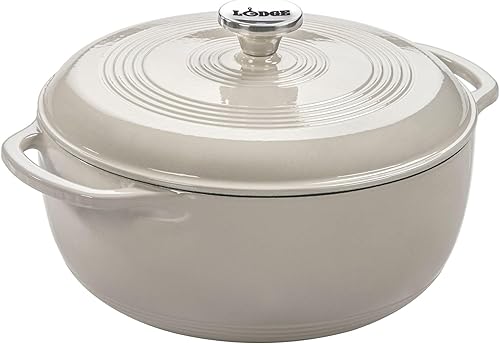 Best for everyday induction cooking
Lodge 6 Qt Enameled Dutch Oven
9.1/10 our score
See it on Amazon -
2

-
3

- 4
 Best for frequent braisingCheck it
- 5
 Check it
Lodge 7 Qt Oval Enameled Dutch Oven
Best for long roasts - 6
 Check it
Tramontina Bestow 5.5 Qt Dutch Oven
Best for easier lifting - 7
 Check it
Staub 3.5 Qt Pumpkin Dutch Oven
Best for seasonal entertaining - 8
 Check it
Overmont 5 Qt Enameled Dutch Oven
Best for modest leftovers - 9Check it
Overmont 4.5 Qt Enameled Dutch Oven
Best for small households - 10
 Best for regular bread bakingCheck it
How we chose the best Dutch ovens for induction cooktops
We prioritized induction compatibility, usable capacity, shape and handling, then compared oven limits and cooking features. These differences matter more than color or included accessories when you need a pot you'll use often.
A round pot is the simplest starting point for a round cooking zone. An oval pot earns its place when longer ingredients matter, while a bread-focused design makes sense when loaves are your main reason to buy.
Enamel needs care regardless of brand, and a self-basting lid cannot correct excessive heat or too little cooking liquid. We favored clear uses for each pot rather than treating shared features as reasons everyone should buy the same model.
Our guide to choosing a Dutch oven by size, shape and enamel can help you settle those choices before comparing individual pots.
| Product | Best for | Capacity | Shape | Oven safe | Our score |
|---|---|---|---|---|---|
| Lodge 6 Qt Enameled Dutch Oven | everyday induction cooking | 6 qt | Round | Up to 500°F | 9.1 |
| Overmont 5.5 Qt Enameled Dutch Oven | family dinners | 5.5 qt | Round | Up to 500°F | 8.8 |
| Overmont 7 Qt Enameled Dutch Oven | batch cooks | 7 qt | Round | Up to 500°F | 8.1 |
| Staub 7 Qt Round Cocotte | frequent braising | 7 qt | Round | Up to 900°F without lid; 500°F with lid | 8.0 |
| Lodge 7 Qt Oval Enameled Dutch Oven | long roasts | 7 qt | Oval | Up to 500°F | 7.9 |
| Tramontina Bestow 5.5 Qt Dutch Oven | easier lifting | 5.5 qt | Round | Up to 450°F | 7.6 |
| Staub 3.5 Qt Pumpkin Dutch Oven | seasonal entertaining | 3.5 qt | Pumpkin | Up to 900°F without lid; 500°F with lid | 7.4 |
| Overmont 5 Qt Enameled Dutch Oven | modest leftovers | 5 qt | Round | Up to 500°F | 7.3 |
| Overmont 4.5 Qt Enameled Dutch Oven | small households | 4.5 qt | Round | Up to 500°F | 7.2 |
| Overmont 6 Qt Bread Oven | regular bread baking | 6 qt | Round | Up to 500°F | 7.0 |
Which Dutch oven fits your induction cooking best?
Choose the round Lodge for general cooking, then move to another pick only when its size, weight or shape solves a specific need. A smaller household, frequent bread baking or long roasts can justify a different choice.
Lodge 6 Qt: best Dutch oven for everyday induction cooking
Lodge 6 Qt Enameled Dutch Oven
- 6 qt capacity
- Round shape
- Induction compatible
- Oven safe up to 500°F
The first choice for family stews, braises and one-pot dinners when you want one pot for cooktop and oven.
Pros
- Non-reactive enamel suits tomato-based meals
- Dual handles for two-handed lifting
- Room for family recipes and leftovers
Cons
- Weighs 14.9 lb before food
- Hand washing is recommended
Buy the Lodge if you want one pot for tomato sauce, chili, chicken braises and weekend baking. Its non-reactive enamel suits acidic ingredients, so you can build a sauce in the same vessel you use to brown the main ingredients.
The capacity gives you room to stir a family meal without filling the pot to its rim. It also leaves space for vegetables around a roast, though ingredient shape still determines what fits.
The main drawback is lifting weight: it weighs 14.9 lb before you add dinner. Plan a clear route between the cooktop, oven and a sturdy trivet, and use both handles with dry oven mitts.
Skip it if you cook only small portions or find heavy cookware difficult to move. The smaller Overmont is a better capacity match for short recipes, while Tramontina reduces the empty weight without dropping to a small serving pot.
Overmont 5.5 Qt Enameled Dutch Oven
- 5.5 qt capacity
- Round shape
- Induction compatible
- Oven safe up to 500°F
A useful family dinner size for cooks who want a self-basting lid and occasional bread baking in the same pot.
Pros
- Condensation bumps return moisture to food
- Includes a cookbook and cotton potholders
- Enamel requires no seasoning
Cons
- Hand wash only
- Less batch capacity than the larger Overmont
Choose the Overmont 5.5 Qt for regular family dinners when you want enough space for stew or a one-pot meal without buying the largest option. Overmont positions this size for 3–5 people, with portions depending on the recipe.
The lid's condensation bumps return moisture toward the food during covered cooking. That suits braises, but you'll still need enough liquid and a gentle simmer to keep the bottom from scorching.
Its enamel requires no seasoning, which keeps routine care simple. The included cookbook provides meal ideas, while the cotton potholders should be used only within their own handling instructions.
This is a useful compromise if you want dinner cookware that can also bake an occasional loaf. Skip it if your main goal is a large batch to freeze, or if an existing pot of similar capacity already feels crowded.
Overmont 7 Qt Enameled Dutch Oven
- 7 qt capacity
- Round shape
- Induction compatible
- Oven safe up to 500°F
Choose this larger pot for meal prep, gatherings and recipes that leave little stirring room in a smaller Dutch oven.
Pros
- Capacity suits large stews and family roasts
- Self-basting lid
- Cookbook and cotton handle covers included
Cons
- Weighs 6.9 kg before food
- Large footprint needs cooktop and storage space
Buy the larger Overmont for batch cooking and gatherings, especially when a smaller pot forces you to split a recipe. Overmont positions it for 5–8 people, making it a sensible direction for big soups and family stews.
Extra capacity creates stirring room, but it doesn't mean every ingredient will brown well in one batch. Spread meat across the cooking surface with gaps between pieces, then work in rounds when needed.
At 6.9 kg empty, this is a substantial pot to move. Consider where you'll drain, serve and store it before choosing it for frequent use.
Skip it for mostly small dinners or a cramped cooking area. If you often make a half recipe, a smaller Dutch oven is easier to work around and leaves more room for another pan on the cooktop.
For help matching capacity to your habits, see our Dutch oven size guide.
Staub 7 Qt Round Cocotte
- 7 qt capacity
- Round shape
- Smooth enamel bottom works on induction
- Textured matte enamel interior
A premium choice for cooks who regularly brown ingredients before a long covered braise.
Pros
- Smooth enamel base
- Lid spikes return condensation
- Made in France
Cons
- Weighs 15.2 lb before food
- Covered cooking has a lower oven limit
Choose the Staub if browning followed by covered braising is a regular part of your cooking. Its textured matte black enamel interior and spiked lid make it a focused option for that routine.
Staub says the interior promotes browning, while the lid returns condensed moisture toward the food. Watch the heat and smell as well as the surface, since browned cooking juices are harder to judge against a dark interior.
The smooth enamel bottom works on induction, but keep it clean before setting it on glass. Grit beneath a heavy pot can mark a cooktop when the pot moves.
Skip it if you mainly make small soups or want cookware that's easy to carry. The pot weighs 15.2 lb, and its high uncovered oven limit does not apply to the lid; use the lower limit whenever cooking covered.
Lodge 7 Qt Oval Enameled Dutch Oven
- 7 qt capacity
- Oval shape
- Induction compatible
- Oven safe up to 500°F
The oval shape suits longer cuts of meat, especially when most of the cooking happens in the oven.
Pros
- Longer shape accommodates roasts
- Fitted lid retains moisture
- Dual handles
Cons
- Weighs 17.9 lb before food
- Oval base needs careful zone matching
Choose the oval Lodge when long cuts of meat drive your choice. The shape can accommodate ingredients that would need trimming or awkward placement in a round pot.
It makes particular sense for a recipe that starts on the cooktop and spends most of its time in the oven. Oven heat surrounds the vessel, while a round induction zone applies heat beneath only part of an extended oval base.
Check your cooktop's guidance before buying it for frequent stovetop simmering. An oval silhouette does not tell you how well the flat base matches your zone.
At 17.9 lb empty, it's the heaviest pot here with a supplied weight in pounds. Skip it if most of your meals are soups, sauces and small stews, or if you cannot comfortably move a loaded pot with both hands.
Tramontina Bestow 5.5 Qt Dutch Oven
- 5.5 qt capacity
- 11.9 lb weight
- Compatible with induction
- Oven safe up to 450°F
A lighter alternative to several family-size pots here, provided your oven recipes stay within its temperature limit.
Pros
- Lighter than the round Lodge
- Off-white enamel makes browning easier to see
- Self-basting condensation ridges
Cons
- Lower oven limit than most picks here
- Hand wash only
Choose the Tramontina if empty weight matters and you still want a family-size Dutch oven. At 11.9 lb, it's lighter than the round Lodge, although food and liquid will add substantially to the load.
Its off-white enamel interior makes it easier to see the color of onions, browned meat juices and sauce residue. That helps when you need to decide whether to keep browning or add liquid before the bottom burns.
The main trade-off is the 450°F oven limit. It covers many braises and baked dishes, but check bread recipes before buying because some call for more heat.
Skip it if your usual baking method exceeds that limit. For everyday induction dinners within its temperature range, the lighter body and visible cooking surface are more useful reasons to choose it than the included lid's condensation ridges alone.
Staub 3.5 Qt Pumpkin Dutch Oven
- 3.5 qt capacity
- Pumpkin shape
- Smooth enamel bottom works on induction
- Textured matte enamel interior
A decorative pot for smaller dishes that you want to cook and serve in the same vessel.
Pros
- Distinctive pumpkin shape
- Lid spikes return condensation
- Made in France
Cons
- Small capacity limits main dishes
- Weighs 12.3 lb despite its smaller size
Choose the Staub Pumpkin for smaller dishes served at the table, especially if its shape is part of the appeal. It can hold a modest soup, vegetable dish or side without requiring a large family pot.
The textured black enamel interior and moisture-returning lid give it a cooking role beyond decoration. Its induction-compatible smooth bottom lets you start a dish on the cooktop before moving it elsewhere to serve.
Do not confuse small capacity with low weight. This pot weighs 12.3 lb, so it isn't the answer if you're downsizing mainly to make lifting easier.
Skip it as your only Dutch oven if you regularly cook roasts or save several portions for later. Choose it when serving style and small dishes matter more than storage efficiency or batch capacity, and remember that the lid has a lower oven limit than the uncovered pot.
Overmont 5 Qt Enameled Dutch Oven
- 5 qt capacity
- Widened handles
- Compatible with induction
- Oven safe up to 500°F
A middle-size choice for smaller dinners with extra portions, with widened handles for a two-handed grip.
Pros
- Self-basting lid
- Stainless steel knob
- Cookbook included
Cons
- Weighs 6.1 kg before food
- Smaller capacity does not mean light cookware
Choose the Overmont 5 Qt if you want dinner plus a modest amount of leftovers rather than a large batch. It sits between the smaller household option and the family dinner model, so recipe volume should guide the choice.
Widened handles provide space for a two-handed grip. Check that your oven mitts let you hold them securely, since thick padding can make any handle opening feel smaller.
Overmont recommends medium to low heat on the stovetop. That fits a patient approach to induction cooking: warm gradually, brown in batches and reduce the setting once a simmer begins.
Skip it if you expect a smaller capacity to mean light cookware. It weighs 6.1 kg empty, so the Tramontina deserves a closer look if carrying weight is the deciding factor rather than a small difference in meal volume.
Overmont 4.5 Qt Enameled Dutch Oven
- 4.5 qt capacity
- Round shape
- Induction compatible
- Oven safe up to 500°F
The everyday choice for singles and couples who want smaller meals rather than a full week of leftovers.
Pros
- Suited to meals for 1–3 people
- Cookbook and cotton handle covers included
- Enamel requires no seasoning
Cons
- Limited room for large roasts
- Less capacity for freezer meal prep
Choose the smaller Overmont for everyday meals for 1–3 people. It's the most direct option here for singles and couples who want soups, pasta sauces and small stews without planning around excessive leftovers.
A smaller recipe is easier to stir when the pot matches its volume. You still need headroom, so don't judge fit by whether all the raw ingredients can be packed inside.
The self-basting lid and enamel finish support the same basic cooking tasks as the larger models. You give up batch capacity, rather than needing a different method for ordinary covered cooking.
Skip it if you regularly double recipes, host dinner or cook large cuts of meat. If freezer meal prep is a weekly habit, move up a size now instead of relying on a pot you'll often need to refill.
Overmont 6 Qt Bread Oven
- 6 qt capacity
- High-domed lid
- Induction compatible
- Oven safe up to 500°F
A bread-focused choice for cooks who want a tall vessel and domed lid for oven-baked loaves.
Pros
- Domed lid holds steam during baking
- Cookbook and cotton handle covers included
- Also supports induction cooking
Cons
- Bread-focused shape may not suit everyday meals
- Confirm conflicting seasoning directions with Overmont
Choose the Overmont Bread Oven when oven-baked loaves are the priority. Its tall body and high-domed lid provide room above the dough and hold steam released during covered baking.
Induction compatibility adds another use, but it isn't a reason to choose a bread-focused vessel over a general-purpose Dutch oven. Think first about which recipes will occupy it most often.
Check oven shelf clearance with the lid in place, and plan where you'll set the hot lid when uncovering a loaf. A heatproof landing spot matters because bread baking often involves handling the lid separately.
Skip it if stews and braises dominate your menu. Also confirm care directions with Overmont before first use: its enamel description says no seasoning is needed, while separate care instructions call for seasoning.
Our guide to Dutch ovens for sourdough bread helps compare baking needs.
What base size works on your induction cooktop?
Match the flat magnetic base to your cooktop's cookware requirements, rather than relying on capacity or overall width. A compatible material still needs to meet the zone's minimum size and placement rules.
Measure the base, not the handles
Use the cooktop manual's minimum pan diameter and recommended cookware range as your starting point. The width across a pot's handles tells you about storage space, but it doesn't tell you the diameter touching the glass.
If that measurement is unclear before ordering, ask for the flat base diameter. This is especially useful for oval and decorative shapes, where the outline above the cooktop can differ from the contact area.
Match the zone to the cooking task
Center the pot on a suitable zone and leave space around its handles. A pot that crowds another pan or overhangs the controls can be inconvenient even when the cooktop detects it.
Cast iron spreads heat over time, but a small active zone beneath a broad base can still concentrate heat in the center. Gradual heating and stirring help, while a suitable zone remains the better starting point.
Don't assume a bridge function accepts every oval pot. Follow your cooktop's instructions for cookware shape and placement before choosing that setup.
Which capacity and shape should you buy?
Choose capacity around your normal recipe plus stirring room, and choose shape around your cooktop and largest ingredients. Buying the biggest pot can create lifting and storage problems without helping everyday meals.
Start with the meals you repeat
A 4.5- or 5-quart pot suits smaller dinners, while 5.5–6 quarts is the useful middle ground for family cooking. Consider a 7-quart pot when you regularly double recipes or feed a larger group.
These are starting points, not fixed serving counts. A thick stew, a whole roast and a broth-based soup use the same capacity in different ways.
Leave room to stir without spilling, and avoid filling to the rim. For browning, judge the floor space as well as volume because piled-up ingredients release moisture and steam.
Choose round unless another shape solves a problem
Round is the practical default for circular induction zones and mixed everyday recipes. Oval earns its extra space when long roasts are common, while a tall bread vessel suits a baking-led routine.
Before buying, measure the storage shelf, oven opening and available cooktop space. Use the full handle width for those checks, and allow room above the lid to remove it safely.
The Dutch oven sizes guide gives more sizing help. If induction fit is already settled, compare the wider field in our best Dutch ovens roundup.
How should you start cooking on induction?
Start with gentle heat and a clear work area, then raise or lower the setting in small steps. Induction can heat the base quickly, while the thick walls take longer to warm.
Wash and dry a new pot according to its instructions, then inspect the cooking surface and base. Keep both the glass and the bottom of the pot free of crumbs, grit and moisture.
For browning, add a little oil and warm gradually unless the brand gives a different method. Avoid a long empty preheat, and use the cookware's instructions for any bread recipe that calls for preheating the vessel.
Once the ingredients brown, add cooking liquid carefully and scrape with a wood or silicone utensil. Bring the liquid to a gentle simmer, then lower the setting before trapped heat pushes it into a hard boil.
After a heat adjustment, give the food time to respond. Cast iron keeps heat, so repeatedly turning the control up and down can make a steady simmer harder to maintain.
Use dry mitts on both handles, including after the pot leaves the cooktop. Remove the lid away from your face so escaping steam travels away from you.
Which mistakes cause trouble with induction Dutch ovens?
The biggest mistakes are using too much heat, overcrowding food and moving a heavy pot carelessly. Avoiding them matters more than choosing between two similar lid designs.
- Using boost for routine preheating: rapid heating can create a large temperature difference across the pot. Start gently and follow the cookware's heating directions.
- Treating an oven limit as a stovetop setting: a temperature limit for oven use does not mean maximum induction power is appropriate.
- Crowding meat during browning: work in batches so moisture can escape rather than collect beneath piled-up food.
- Boiling a covered braise hard: a moisture-returning lid does not prevent scorching or overcooking. Aim for a gentle simmer.
- Dragging the pot to another zone: lift with both hands, and set it down carefully rather than sliding it across glass.
- Lifting a full pot one-handed: plan the move first, clear the route and keep a stable heatproof surface ready.
Also account for the lid when checking an oven limit. The Staub pots have different covered and uncovered limits, so the higher number is not the limit for a closed braise.
How do you clean and protect the enamel?
Let the pot cool, then hand wash with mild soap and a non-abrasive tool unless its instructions require another method. Avoid sudden temperature changes, including cold water in a hot pot.
Loosen stuck food with warm soapy water rather than scraping with a metal tool. For stubborn residue, use a method approved for enamel and avoid force that could damage the surface.
Dry the pot before storing it, and protect the finish if another heavy item sits inside. Follow any separate care directions for exposed edges, handles or the lid.
Enamel does not need the routine seasoning used for bare cast iron. The bread oven's conflicting directions deserve confirmation before you apply oil or begin a seasoning cycle.
Read how to clean an enameled Dutch oven for more detailed cleanup steps. Our first-use guide and Dutch oven care guide cover handling and ongoing upkeep.
Which induction Dutch oven should you choose?
The best Dutch oven for your induction cooktop is the one that fits its zone, holds your usual recipe and remains manageable when full. Use those limits to narrow the choice before considering color or accessories.
Pick the Lodge 6 Qt for mixed everyday cooking, or the Overmont 5.5 Qt when its slightly smaller family dinner capacity suits your recipes. Choose the Overmont 4.5 Qt for short meals and the larger Overmont for regular batch cooking.
Choose Tramontina when lower empty weight matters and your oven recipes stay within its limit. Staub suits frequent braising, while the oval Lodge earns its place for long roasts and the domed Overmont for regular bread baking.
Before ordering, check base fit, loaded lifting needs and storage space one last time. If your remaining choice comes down to brand, our guide to Dutch oven brands is the useful next step.
Our top 3 picks at a glance
-
1
Best for everyday induction cooking
Lodge 6 Qt Enameled Dutch Oven
9.1/10 our score
See it on Amazon -
2
-
3
Frequently asked questions
How do I know if a Dutch oven works on induction?
Choose a Dutch oven with a magnetic base and explicit induction compatibility. All models in this guide support induction cooking, but your cooktop also sets cookware size requirements.
Compare the flat base with the manual's minimum diameter and zone guidance; handle-to-handle width is not the measurement you need.
Are enameled cast iron Dutch ovens good for induction?
Yes, induction-compatible enameled cast iron works well for simmering and braising because cast iron holds heat between heat adjustments. Enamel provides a cooking surface that does not need routine seasoning.
Our guide to enameled cast iron Dutch ovens explains how finish and capacity affect your choice.
Can an oval Dutch oven go on an induction cooktop?
Yes, an induction-compatible oval Dutch oven can work if it meets your cooktop's cookware requirements. Its ends may extend beyond a round zone, so center it carefully and allow time for heat to spread.
See our Dutch oven size guide before choosing an oval pot mainly for longer roasts.
Can I use a Dutch oven on induction at high heat?
Start with low to medium heat unless your cookware instructions direct otherwise. Induction can heat the base quickly, while thick cast iron takes time to spread that heat through the pot.
Overmont recommends medium to low stovetop heat for its 5-quart model; our first-use guide covers heating and handling basics.


