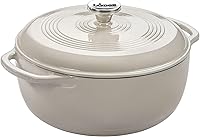
How to Choose a Dutch Oven: Size, Shape and Enamel
To learn how to pick a Dutch oven, match capacity to your regular meals, shape to your food, and finish to your care routine. Then check its weight, handles, dimensions and heat limits.
On this page (9 sections)
- How to pick a Dutch oven size for your meals
- Is a round or oval Dutch oven better?
- Should you choose enamel or bare cast iron?
- Which design works for bread and everyday cooking?
- What should you measure before buying?
- How should you set up and use a new Dutch oven?
- What care routine should you expect?
- Which common buying mistakes should you avoid?
- How to pick a Dutch oven you'll use often
To decide how to pick a Dutch oven, match its size to your regular meals, its shape to your food, and its finish to the care you'll do. Then check that you can lift it, store it and use it with your cooktop and oven.
A round enameled pot is a useful starting point for mixed cooking. An oval pot, bread-focused design or bare cast iron model makes more sense when a specific cooking habit calls for it.
For a deeper capacity comparison, see our Dutch oven size guide. Start with the meals you cook each week, rather than choosing by color or the biggest capacity you can fit in a cabinet.
How to pick a Dutch oven size for your meals
Choose enough room for your normal batch, with space to stir and turn food. Extra capacity helps with regular batch cooking, but an oversized pot adds weight and storage demands to every meal.
Think about usable space as well as volume. Soup can fill a deep pot efficiently, while meat needs room across the bottom to brown.
| Capacity range | Consider it for | Main trade-off |
|---|---|---|
| About 5 qt | Smaller batches, everyday meals and some leftovers | Less room for bulky ingredients |
| About 6 qt | Mixed cooking when you want one main pot | A full pot can be heavy |
| About 7 qt or more | Regular batch cooking and larger roasts | More space needed for cooking, washing and storage |
These are starting points, not fixed serving counts. A thick stew, a pot of broth and a bone-in roast use the same capacity differently.
Don't plan to fill a Dutch oven to the rim. Leave room for bubbling liquids and stirring, especially with beans, pasta or other foods that expand during cooking.
If you brown meat before a braise, expect to work in batches. Buying a much bigger pot just to avoid one extra batch can leave you with cookware that's awkward for most dinners.
The Dutch oven sizes guide compares common capacities in more detail. If you've narrowed the choice to the middle range, our 5 to 6 qt Dutch oven picks can help.
How to pick a Dutch oven using your usual recipes
Use 3 meals you cook often as your buying checklist. Include one liquid dish, one bulky meal and bread if baking is part of your routine.
Check whether those recipes specify pot capacity, meat dimensions or loaf shape. A pot that holds enough liquid may still be too narrow for your usual roast.
Buy for regular needs rather than rare events. A smaller household that freezes meals may need more room than a larger household that cooks only enough for dinner.
Is a round or oval Dutch oven better?
Choose round for mixed stovetop cooking and oval when long cuts of meat are a regular part of your menu. Shape should solve a cooking problem rather than simply provide a different look.
A round pot is easy to center over a round burner. It also leaves no long ends extending beyond the heat source, which helps when you brown ingredients before adding liquid.
An oval pot gives you length for a roast or other bulky food. On a small round burner, its ends may heat more slowly, so give it time to warm and move ingredients as needed.
The Lodge 7 Qt Oval Enameled Dutch Oven suits cooks who regularly braise long cuts or make larger meals. Its fitted cast iron lid helps retain heat and moisture during covered cooking.
Skip this oval Lodge if most meals start on a small burner, or if carrying heavy cookware is difficult. Its empty weight is 17.9 lb, before you add food.
Its induction compatibility and 500°F oven limit support stovetop-to-oven recipes. Check the full footprint against your oven rack, including space to grip both handles.
If your main need is browning several pieces of meat in one layer, a shallower vessel may suit you better. Compare a Dutch oven versus braiser before choosing extra depth you rarely use.
Should you choose enamel or bare cast iron?
Choose enamel for acidic dishes and simpler surface care, or bare cast iron if you want seasoned cookware and accept its upkeep. The difference affects what you cook and what happens after dinner.
Enamel forms a glass-like coating over the iron. It doesn't need the oil seasoning that protects bare cast iron, though it still needs gentle handling to avoid chips.
Tomato sauces and wine braises are strong reasons to choose enamel. Long acidic cooking can affect bare iron's seasoning and may give food a metallic taste.
Bare cast iron needs prompt drying after washing. A thin coat of oil when needed helps protect the surface, while soaking it or leaving it wet can lead to rust.
The Lodge 5 Qt Cast Iron Dutch Oven suits cooks who want one vessel for indoor cooking and outdoor use. Its lid also serves as a dual-handle skillet, giving it a second job beyond covering the pot.
Skip this bare Lodge if long tomato-based simmers are your main use, or if you want to leave cookware soaking after meals. It weighs 12.8 lb empty, so the smaller capacity doesn't make it lightweight.
Before planning high-heat bread recipes, confirm the permitted temperature for the exact pot you receive. Outdoor compatibility doesn't replace the need to follow its heat instructions.
For more on finishes, read our enameled cast iron Dutch oven buying guide. Our guide to whether enameled Dutch ovens are safe also explains coating care and damage.
Which design works for bread and everyday cooking?
Choose a standard round pot for mixed meals, or a bread-focused design when loaf baking drives the purchase. Both need enough room for dough to expand without pressing against the lid.
A covered pot traps moisture released by dough during the early part of a bake. Later, removing the lid lets the crust brown, following your recipe's timing.
Capacity alone doesn't tell you whether a loaf fits. Compare the loaf's shape with the interior width and height, and allow room to lower the dough into the pot safely.
When does a standard round pot make more sense?
A standard round pot makes more sense when bread shares kitchen time with soups, beans and braises. It lets you buy around several regular meals rather than one baking project.
The Lodge 6 Qt Enameled Dutch Oven fits that role. Its porcelain enamel surface handles acidic ingredients, so it can move between bread baking and tomato-based dishes without seasoning upkeep.
It works on gas, electric, ceramic and induction cooktops. That makes it a practical choice if you want to brown ingredients on the stove before moving dinner into the oven.
Skip this Lodge if lifting weight is your main concern or your regular batches are small. It weighs 14.9 lb empty, and food adds to the load.
Choose it for mixed cooking rather than for its appearance alone. A pot that's comfortable to wash and put away is more useful than one you avoid moving.
When does a domed bread oven make more sense?
A domed bread oven makes more sense when you bake often and want space above a rising loaf. It should match your dough size and oven clearance, rather than simply having the tallest lid.
The Overmont 6 Qt Bread Oven has a high-domed lid and a tall body aimed at home bread baking. Overmont says the lid traps steam to support loaf rise and crust development.
This model weighs 11.6 lb and has a 500°F oven limit. It also works on gas, electric, ceramic and induction cooktops, with a cookbook and cotton handle covers included.
Skip the Overmont if bread is an occasional project and your main need is room for long roasts. A standard pot may cover your weekly meals more directly.
Follow the instructions supplied with this model before its first bake, particularly for preheating and surface care. Don't assume the included handle covers are suitable for every oven task or temperature.
Our sourdough Dutch oven guide compares more bread-focused options.
What should you measure before buying?
Measure the cooking space, storage space and path between them. A pot can fit inside an oven yet still be awkward to lift from the rack or wash in the sink.
Start with overall width, including handles, and total height with the lid attached. Leave room above it to lift the lid without hitting an oven element or shelf.
Check the base against your usual burner, rather than comparing only the top diameter. A wide upper body doesn't mean the entire bottom receives direct heat.
For induction, confirm compatibility with the exact model and check your cooktop's guidance on pan size. Our guide to using a Dutch oven on induction explains the main fit issues.
Handle space matters once you put on oven mitts. Small openings can be awkward when you need a firm two-handed grip on a full pot.
Check where the hot lid will go during cooking. It needs a stable, heat-safe landing spot that won't block the route from oven to counter.
Store heavy cookware low enough to reach without lifting it overhead. If the pot will stay on the stove, make sure it won't crowd the burners you use for other pans.
How should you set up and use a new Dutch oven?
Start with the supplied care instructions, a first wash and a clear lifting plan. Check the pot and lid for damage before cooking, then prepare a heat-safe place for both.
Wash as directed and dry thoroughly. An enameled cooking surface generally needs no seasoning, while bare iron needs seasoning care appropriate to its finish.
On the stovetop, warm cast iron gradually. Its stored heat means a lower setting can keep food simmering after the pot has warmed.
For browning, dry the food, add cooking fat and leave space between pieces. Crowding makes food release moisture into a packed pot, which works against browning.
After searing, reduce the heat before adding liquid. Avoid pouring cold liquid into a very hot, dry enameled pot, since a sudden temperature change can damage the coating.
For a braise, aim for gentle bubbling rather than a hard boil. Check liquid during cooking, especially when adapting a recipe to a wider pot that exposes more surface area.
Treat both the lid and handles as hot. Use dry mitts and lift with both hands, keeping the route to the counter clear.
For bread, follow model-specific guidance on empty preheating. Oven-safe temperature and permission to heat an empty pot are separate checks.
Our guide to using a Dutch oven for the first time walks through the cooking steps in more detail.
What care routine should you expect?
Expect hand washing and full drying to be part of regular Dutch oven care. Enamel removes seasoning work, but it doesn't remove the need to protect the surface.
Let the pot cool before washing. Adding cold water to hot enamel creates a sharp temperature change, while moving a full hot pot to the sink also makes handling harder.
For enamel, use warm soapy water and a soft sponge or nylon brush. Let stuck food soften rather than attacking it with sharp tools or harsh abrasives.
The round Lodge has mixed dishwasher guidance, so hand washing is the sensible routine. It also avoids treating dishwasher compatibility as a reason to ignore gentler care.
For bare iron, wash promptly, dry fully and apply a very thin coat of oil when needed. Avoid long soaks and don't put it away with moisture trapped inside.
Place a soft separator between stacked enameled pieces. Protect the rim from knocks, and avoid dragging heavy cookware across a glass cooktop.
If sauce burns onto the surface, use the methods in our guide to cleaning an enameled Dutch oven before reaching for an abrasive cleaner.
Which common buying mistakes should you avoid?
Avoid buying around one headline feature while overlooking daily fit. Capacity, finish and shape only help when the pot suits your meals and handling needs.
- Choosing the largest pot available: extra room brings extra weight and storage demands, even when you cook a small batch.
- Treating equal capacities as equal shapes: a tall bread pot and a broad cooking pot arrange food differently.
- Ignoring the lid: its height, grip and heat limit matter just as much as the base.
- Expecting enamel to act like a nonstick pan: use suitable heat, cooking fat and time for browned food to release.
- Buying oval for occasional roasts: consider how often you'll use its extra length compared with everyday burner fit.
- Choosing bare iron without accepting its care: prompt drying and seasoning upkeep need to fit your routine.
Don't let color settle a close choice until the practical checks pass. Weight, handle clearance and storage access affect every use.
How to pick a Dutch oven you'll use often
Make the final choice by matching the pot to your most frequent cooking task. Then rule out any option you can't comfortably lift, wash or store.
Choose the Lodge 6 Qt Enameled Dutch Oven for mixed soups, braises and bread. It suits cooks who want a round coated pot and can manage its loaded weight.
Choose the Lodge 7 Qt Oval Enameled Dutch Oven when long roasts and larger batches are regular meals. Buy it only after checking burner coverage and oven clearance.
Choose the Overmont 6 Qt Bread Oven when frequent loaf baking makes the tall body and domed lid useful. Choose the Lodge 5 Qt Cast Iron Dutch Oven for seasoned iron, a skillet lid and indoor or outdoor cooking.
If you're still deciding how to pick a Dutch oven, settle the finish and shape before comparing more models. Our best Dutch ovens guide is the next step once those choices are clear.
Frequently asked questions
What size Dutch oven should I buy?
Start with 5 to 6 qt for everyday soups, stews and braises, then adjust for your usual batch. Choose more room for bulky roasts or regular batch cooking, rather than an occasional holiday meal; check outside dimensions and empty weight, since capacity alone won't tell you whether a pot fits your kitchen.
Is a round or oval Dutch oven better?
Round is the better starting point for mixed stovetop cooking because its base fits the shape of common burners. Oval suits long roasts and other ingredients that need length; choose the shape your regular meals need, then check burner coverage, oven clearance and storage space before buying.
Should I choose an enameled or bare cast iron Dutch oven?
Choose enamel for frequent tomato sauces, wine braises and other acidic dishes, especially if you don't want to maintain seasoning. Choose bare cast iron if seasoning care suits you or you need a model approved for outdoor cooking; bare iron needs prompt drying and a light coat of oil when needed.
Can you bake bread in an enameled Dutch oven?
Yes, an enameled Dutch oven can bake bread when its heat limit and preheating instructions match the recipe. Check the lid, knob and handles as well as the pot; leave room for dough expansion, and don't assume a stated oven limit also permits prolonged empty preheating.
What should I check before buying a Dutch oven?
Check capacity, shape, outside dimensions, empty weight, handle clearance, lid design and cooking compatibility. Picture lifting it with food inside and washing it in your sink; confirm that its oven limit fits your recipes and that you have a stable storage spot you can reach without lifting overhead.