Le Creuset Dutch Oven Sizes: Which One to Buy
Among Le Creuset Dutch oven sizes, choose 5.5 qt for everyday meals, 7.25 qt for larger batches, or the 6.5 qt Deep Oven for tall-sided cooking. Choose the Bread Oven for loaves, and check fit and lifting weight before buying.
On this page (11 sections)
- Which Le Creuset Dutch oven size should you choose?
- Is the 5.5 qt Le Creuset the right size?
- When does the 7.25 qt size make more sense?
- Should you choose the 6.5 qt Deep Oven?
- Is the Bread Oven one of the Le Creuset Dutch oven sizes?
- What should you measure before choosing?
- How should you set up and use your chosen size?
- What size-related mistakes should you avoid?
- How do you care for a larger enameled Dutch oven?
- How do Le Creuset sizes compare with other Dutch ovens?
- Which Le Creuset Dutch oven size should you buy?
Among Le Creuset Dutch oven sizes, start with the 5.5 qt round for everyday meals, choose the 7.25 qt round for larger batches, or pick the 6.5 qt Deep Oven when tall sides suit your cooking. The Bread Oven serves a separate purpose: baking loaves.
Choose around the meals you make often, the space you have and the weight you can lift safely. Extra capacity helps only when you use it.
If you are comparing brands as well as sizes, read our guide to the best Dutch oven brands. For a broader look at capacity and shape across brands, see Dutch oven sizes and shapes.
Which Le Creuset Dutch oven size should you choose?
Choose the smallest capacity that comfortably holds your largest regular recipe. Leave working room for stirring, bubbling and adding ingredients, rather than planning to cook right up to the rim.
| Option | Capacity or size | Choose it for | Skip it if |
|---|---|---|---|
| Le Creuset 5.5 Qt Round Dutch Oven | 5.5 qt | Routine meals and mixed cooking tasks | Large batches are a weekly habit |
| Le Creuset 7.25 Qt Round Dutch Oven | 7.25 qt | Bigger recipes and planned leftovers | You usually cook small amounts |
| Le Creuset 6.5 Qt Signature Deep Oven | 6.5 qt | Tall-sided soup, stew and pasta cooking | Easy lifting is your main need |
| Le Creuset 9.5 Inch Bread Oven | 9.5 in diameter; 1.6 liters | Dedicated loaf baking | You need a pot for liquid-based meals |
Use quart capacity to compare the 3 multipurpose ovens. The Bread Oven's diameter describes its bread-baking shape, so a larger number in inches does not mean a larger meal pot.
Match Le Creuset Dutch oven sizes to your weekly meals
Batch size matters more than head count. A household cooking one dinner needs a different amount of space from one making dinner plus several freezer portions.
Write down 3 meals you make often, including the number of portions you want left over. Include bulky ingredients such as greens, bone-in meat or uncooked vegetables, which can take up considerable room before they soften.
If you already use a pot for those meals, note where it falls short. Overflow during stirring suggests a capacity problem, while crowded browning may call for cooking in batches rather than simply buying a deeper pot.
Serving counts are rough guides because soup, a roast and a thick bean stew use space differently. Let a familiar recipe give you the final check.
Is the 5.5 qt Le Creuset the right size?
The 5.5 qt round Dutch oven is the strongest starting point here for a first multipurpose pot. It suits cooks who want one vessel for routine stews, pasta sauces, braises and occasional baking.
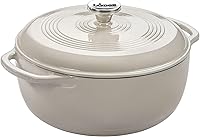
Its light-colored interior makes it easier to watch browning and spot when browned bits need liquid. That is useful when a recipe moves from searing meat to simmering a sauce in the same pot.
Choose this size if your usual meals fit without pressing ingredients against the lid or making stirring awkward. It also makes sense when you prefer cooking fresh meals over preparing several days of food at once.
Skip it if you regularly divide one recipe between 2 pots because you run out of space. Buying the smaller oven and repeating that workaround misses the main reason to own a large cooking vessel.
For an occasional crowd, you can serve a smaller braise with separately cooked rice, potatoes or vegetables. That lets your everyday pot remain practical for the rest of the week.
A whole roast needs a shape check as well as a capacity check. Plenty of room for liquid does not guarantee that a long or wide piece of meat will sit comfortably inside.
For a closer look at this particular size, read our Le Creuset 5.5 qt Dutch oven review. Our Dutch oven size guide explains how to match capacity to your cooking plans.
When does the 7.25 qt size make more sense?
Choose the 7.25 qt round oven when larger batches are part of your normal week. It offers the most capacity among these options, making it the clearest choice for bigger soups, stews and planned leftovers.
The extra room helps when you need to stir a thick stew, fold in vegetables or combine a finished sauce with other ingredients. You do not have to fill it for every meal, but your regular recipes should justify handling the larger vessel.
It is a useful choice for cooks who freeze portions or prepare a main dish for guests often. Think in terms of your normal cooking schedule, rather than the single largest dinner you might host.
Skip it if most meals involve a small amount of sauce or a modest portion of food. Small quantities can need closer attention as liquid cooks away, and extra capacity adds no benefit when the recipe already fits comfortably in a smaller pot.
A larger pot also does not remove the need to brown meat in batches. Pieces need space between them so moisture can escape instead of collecting around the food.
Plan where a full pot will land before lifting it out of the oven. A stable trivet near the oven makes the move easier than carrying dinner across the kitchen.
If the weight feels doubtful before food goes in, choose another size or plan to portion food out before moving the pot. Handles help you grip; they do not make a full cast iron vessel light.
Should you choose the 6.5 qt Deep Oven?
Choose the 6.5 qt Signature Deep Oven when you want extra depth for liquid-based meals. Le Creuset says its tall sides help contain splatters and reduce boil-overs.
This shape suits cooks who often build soups, simmer stews or stir pasta dishes. Extra wall height gives splashes farther to travel before reaching the cooktop, though you still need space above the food.
Do not choose it solely because its capacity sits between the 2 standard round ovens. Depth changes how you reach, stir and lift food, so the shape deserves as much thought as the quart number.
For searing several pieces of meat, base area matters more than wall height. Extra depth does not create more room for food to contact the cooking surface.
Skip the Deep Oven if you mainly want shallow cooking, easy access for turning food or the lightest option here. It has the highest empty weight of these 4 products.
Le Creuset describes this design as adding capacity without crowding the stovetop. Still, check your own burner layout and surrounding pans instead of assuming the deeper shape will solve every space problem.
Tall sides can help contain splatter during frying, but they do not make filling the pot with oil safe. Leave generous headroom for bubbling, dry food before adding it and keep water away from hot oil.
Is the Bread Oven one of the Le Creuset Dutch oven sizes?
The 9.5 in Bread Oven is a dedicated loaf-baking tool, with a shape that serves a different job from the deep meal pots. Choose it when bread is the main reason you are shopping.
Its domed lid is designed to trap and circulate steam around the loaf. The low-profile base gives you access to the dough without reaching down into a tall pot.
Raised ridges on that base are designed to promote even browning and mark the loaf with 3 rings. Le Creuset says the matte black interior enamel develops a patina over time to support baking performance.
This is a sensible addition if you already have a pot for soups and braises and want a separate bread vessel. It also keeps your meal pot available while bread is in the oven.
Skip it as your first and only Dutch oven if you need to cook stews, sauces and other liquid-based meals. A low base cannot serve the same purpose as tall walls.
Match the loaf's shape to the baking space and allow for expansion. Diameter alone does not tell you how much dough a recipe can use, since loaf height and dough behavior also matter.
For any hot-pot bread method, plan the loading and lid-removal steps before heating begins. Keep dry oven mitts and a heat-safe resting place for the lid within reach.
What should you measure before choosing?
Check storage, burner fit, oven clearance and lifting weight before ordering. Capacity tells you how much a pot holds, while physical fit determines how easily you can use it.
| Model | Published width and height | Empty weight |
|---|---|---|
| 5.5 qt round | 12.25 in wide × 5.5 in high | 5.1 kg |
| 7.25 qt round | 11.02 in wide × 7.24 in high | 6.1 kg |
| 6.5 qt Deep Oven | 13.9 in wide × 7.6 in high | 6.59 kg |
These dimensions do not guarantee the usable base diameter or handle clearance. Check the exact measurements for the version you are considering before relying on a tight cabinet or oven fit.
For storage, measure the shelf opening as well as the shelf itself. You need enough room to slide the pot in and lift it out without catching a handle.
In the oven, account for the lid and room above it for a gloved hand. Set the rack height before the oven gets hot.
On the cooktop, compare the pot base with the burner and follow your cooktop's guidance for pan size. A pot that fits by itself may still block access to neighboring burners.
The Bread Oven weighs 4.4 kg empty, so even the specialist option needs a comfortable lifting plan. For every model, food and liquid add to the load, and awkward storage can make retrieval harder than lifting from a counter.
How should you set up and use your chosen size?
Wash, dry and plan your cooking space before the first meal. All 4 options have enamel that requires no seasoning, so you do not need to build an oil coating before use.
Remove packaging and follow the care instructions supplied with the oven. Check that the lid sits properly and that you have a safe place for the hot pot and lid.
For routine stovetop cooking, start with gentle heat and give the cast iron time to warm. Use higher heat only when the cooking method and care instructions call for it.
For browning, dry ingredients and avoid piling them together. Work in batches, then add liquid and loosen browned bits before they burn.
Keep room above simmering food, especially with starchy or foaming dishes. A tight-fitting lid helps return moisture, but it does not prevent an overfilled pot from boiling over.
When a sauce needs to thicken, adjust the lid position or cook uncovered as the recipe directs. Choosing a larger size is not a substitute for controlling heat and evaporation.
For oven use, follow the temperature and preheating instructions for your exact pot and recipe. Bread methods that call for heating an empty vessel deserve a specific check against the cookware instructions.
Use dry mitts on both handles and lift the pot rather than dragging it across the cooktop. Our guide to using a Dutch oven for the first time covers the basic cooking steps in more detail.
What size-related mistakes should you avoid?
Avoid buying for rare events, filling to the rim or treating capacity as cooking surface. These mistakes can leave you with a pot that is awkward to use despite having enough volume.
Buying the largest option for one annual gathering can mean handling unnecessary weight all year. Choose for your weekly meals, then decide how you will manage the occasional bigger dinner.
Doubling a recipe does not mean every stage needs exactly twice the volume. Raw vegetables can be bulky, foaming liquids need headroom, and meat may still need several browning batches.
Choosing extra depth to solve crowded searing addresses the wrong problem. Spread food out, reduce the batch size or use a vessel with a suitable cooking surface.
Do not assume a deep pot will fit because a shallower one does. Check the lid height against oven racks and cabinet openings before settling on the shape.
Finally, avoid choosing a color before deciding on capacity and handling. The right finish cannot compensate for a pot that is too heavy or too small for dinner.
How do you care for a larger enameled Dutch oven?
Let it cool before washing, then use gentle cleaning methods. A larger pot needs more sink space and can become harder to control when wet.
Avoid moving hot cast iron straight into cold water. Let stuck food soften with warm water after the pot has cooled enough to handle safely.
Use utensils and cleaning tools that follow the enamel care instructions. Do not scrape stubborn residue with a sharp metal edge or strike utensils against the rim.
The 3 multipurpose ovens are dishwasher-safe, but hand washing lets you support the weight and inspect the interior as you clean. Dry the pot and lid before putting them away.
Support the base when washing instead of hanging the full weight from one handle. If the sink is cramped, clear nearby dishes first so the enamel does not knock against them.
When stacking cookware, place a soft barrier between hard surfaces. Store the pot where you can lift it with both hands without stretching overhead.
How do Le Creuset sizes compare with other Dutch ovens?
Compare capacity, shape and handling across brands before paying for a premium pot. A familiar size label is useful, but it does not settle fit, weight or cooking access.
Our Lodge vs Le Creuset comparison covers the differences between these brands. You can also read whether Le Creuset Dutch ovens are worth the money for a broader value discussion.
The 3 multipurpose Le Creuset ovens share enameled cast iron construction and tight-fitting lids designed to return moisture. Their capacity, shape and weight are the more useful differences for this decision.
If no option here fits your handling or space needs, compare alternatives in our best Dutch ovens guide. Keep the same recipe and storage requirements in mind as you compare.
Which Le Creuset Dutch oven size should you buy?
Make your final choice among Le Creuset Dutch oven sizes by checking recipe fit first, then lifting and storage. Reject a pot that fails either check, even if its capacity looks right.
- Choose the 5.5 qt round if your regular meals fit comfortably and you want one pot for varied cooking.
- Choose the 7.25 qt round if bigger batches and leftovers are routine.
- Choose the 6.5 qt Deep Oven if tall-sided cooking suits your meals and its weight is manageable.
- Choose the Bread Oven if you want a dedicated loaf vessel and already have everyday meal cooking covered.
Before buying, name the first 3 meals you will cook in it and decide where it will live. If those answers are clear, use our premium Dutch oven guide to put that choice in context.
Frequently asked questions
What size Le Creuset Dutch oven is best for everyday use?
The 5.5 qt round oven is the best starting point here for everyday soups, stews and braises. Move up when your usual recipes need more room, rather than buying extra capacity for a rare holiday meal; check storage and comfortable lifting weight before making the final choice.
Is a 5.5 qt Le Creuset Dutch oven big enough?
A 5.5 qt oven is big enough when your regular recipe fits with room to stir and simmer. Household size alone cannot answer this: a couple cooking several freezer meals may need more space than a larger household making one dinner; compare your usual recipe with a pot you already use.
What is the difference between the Le Creuset 6.5 qt Deep Oven and 7.25 qt round oven?
The 6.5 qt Deep Oven favors extra depth and tall sides, while the 7.25 qt round oven offers more total capacity; choose by cooking method as well as volume. The Deep Oven also weighs more empty, so its smaller quart figure does not mean easier lifting.
Is the Le Creuset Bread Oven a replacement for a Dutch oven?
The Bread Oven is a specialist for loaves, with a domed lid and low-profile base; it makes sense as a dedicated bread tool, especially if you already have a pot for meals. Choose a multipurpose round Dutch oven first if you need one vessel for soup, stew and bread.