Lodge Dutch Oven vs Le Creuset: Which Is Better? (October 2026)
In the Lodge Dutch oven vs Le Creuset choice, pick Lodge for general-purpose cooking, the 5.5 qt Le Creuset for easier lifting, or the 6.5 qt Le Creuset for deep-pot meals.
On this page (10 sections)
- Lodge Dutch oven vs Le Creuset: which should you choose?
- Who should buy each pot, and who should skip it?
- How do capacity and shape change what you can cook?
- Does Le Creuset cook better than Lodge?
- Which pot is easier to lift and store?
- How should you set up and use a new Dutch oven?
- How do cleaning and enamel care compare?
- Which common mistakes should you avoid?
- Is paying more for Le Creuset worthwhile?
- Which one should you buy?
Choose Lodge for general-purpose cooking, the 5.5 qt Le Creuset for easier lifting, or the 6.5 qt Le Creuset for deeper liquid meals. The useful question in a Lodge Dutch oven vs Le Creuset comparison is which pot fits your recipes and daily handling.
All 3 are round enameled cast iron pots. Your choice comes down to capacity, weight, access to the cooking surface and the features you'll use often.
For background on the coating and construction, start with our enameled cast iron Dutch oven buying guide.
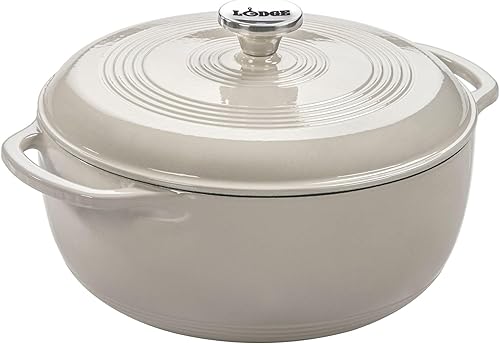

Lodge Dutch oven vs Le Creuset: which should you choose?
Lodge is the straightforward all-purpose choice, while Le Creuset offers 2 more specific reasons to buy: lower weight in the smaller round model or added depth in the larger one.
Choose around your most common meal, rather than the largest meal you might cook once a year. A pot that feels manageable on a busy evening is more useful than one you avoid lifting or washing.
Lodge vs Le Creuset Dutch ovens by cooking routine
- Mixed weekly cooking: Choose Lodge for a rotation of braised meat, beans, soups and baking.
- Frequent stove-to-oven moves: Choose the smaller Le Creuset if reducing the empty load matters.
- Large liquid meals: Choose the deep Le Creuset for soups, stews and pasta dinners that need headroom.
- Mostly shallow cooking: Reconsider the deep model if you mainly brown cutlets or reduce small amounts of sauce.
The Le Creuset name alone isn't a reason to replace a pot that already fits your meals. Buy a different shape or size when you can identify the task it will make easier.
For more brand context, see our guide to the best Dutch oven brands. Our reviews of Lodge Dutch ovens and Le Creuset Dutch ovens explain each brand's appeal in more detail.
Who should buy each pot, and who should skip it?
Buy the Lodge for a broad mix of meals, the smaller Le Creuset for easier handling, and the deep Le Creuset when liquid capacity drives your choice. Each has a clear reason to choose it and a reason to pass.
Lodge: a useful first all-purpose pot
The Lodge suits cooks who want one pot for simmering, braising and baking. Its enamel also suits acidic ingredients, so tomato-based sauces and wine braises belong in the same cooking routine.
Its middle position in this comparison makes sense if the smaller option feels tight but you don't need extra-tall sides. It can also handle marinating and refrigerating, though a smaller storage container may fit your fridge more easily.
Skip it if lifting is your main concern. The smaller Le Creuset reduces the empty load, which matters when moving dinner from an oven rack to the counter.
Le Creuset round: useful for regular transfers
The smaller Le Creuset suits cooks who carry their pot often and want a light-colored interior for watching food. That interior helps you see the color of browned bits before they turn too dark.
Its handles are designed to accommodate bulky oven gloves. That matters when you need a secure grip on a hot pot, though comfortable handling still depends on your hands and gloves.
Skip it if your usual recipes already fill a similar-size pot. A lighter vessel won't solve crowded ingredients or a soup batch that needs more room.
Le Creuset deep: useful for liquid batch meals
The deep Le Creuset suits cooks whose usual meals rise high in the pot. Le Creuset says its tall sides help contain splatters and reduce boil-overs, making the shape useful for bubbling soups and stews.
The tradeoff is reaching farther down to turn food, scrape the bottom and serve the last portions. Use a utensil long enough to reach comfortably without resting your hand near the hot rim.
Skip it if you mainly want more browning space. Added depth increases volume, but it doesn't guarantee a larger flat cooking surface.
How do capacity and shape change what you can cook?
Choose volume for soups and stews, and cooking surface for browning. A deeper pot can hold more liquid without giving you more room to lay meat in a single layer.
The capacities here are 6 qt for Lodge, 5.5 qt for the Le Creuset round and 6.5 qt for the Le Creuset deep. Those differences matter most when a familiar recipe already comes close to filling your current pot.
Don't plan to cook at the brim. Leave room to stir, add ingredients and manage bubbling without spilling onto the cooktop.
For meat-heavy braises, think about the size and shape of the pieces before thinking about servings. A wide roast may be awkward even when the pot has enough total volume for the meal.
Browning in batches is often the right approach with any Dutch oven. Crowding the base traps moisture around the food and makes it harder to build a browned surface.
For sauces, removing the lid allows steam to escape and the liquid to reduce. A tight-fitting lid helps hold moisture during a braise, but it won't thicken a watery sauce while kept closed.
Use your usual recipes as a size check, then consult our Dutch oven size guide if you're choosing your first pot.
Does Le Creuset cook better than Lodge?
Neither brand earns an automatic win across every recipe. Both use enameled cast iron, so heat control, food spacing and cooking time remain central to the result.
Both brands describe their pots as distributing and retaining heat evenly. Heat retention is useful for a steady simmer, but it also means the pot responds slowly when you turn the burner down.
Start with moderate heat and give the vessel time to warm. If a sauce begins boiling hard, lowering the dial may take time to settle it; move the pot off the burner briefly if needed.
Both Le Creuset models have light interiors that make changes in food color easier to see. That helps when browning butter, softening onions or judging the browned bits you plan to loosen with liquid.
Lodge works on gas, electric, ceramic and induction cooktops, and both Le Creuset models support all cooktop types. Induction compatibility doesn't separate these choices.
Choose a burner that suits the base, and lift rather than drag the pot across a smooth cooktop. Start an induction burner at a moderate setting instead of using a rapid boost to heat the vessel.
Which pot is easier to lift and store?
The smaller Le Creuset is the easiest starting point for weight-conscious buyers. Its empty weight is about 11.2 lb, compared with 14.9 lb for Lodge and 14.5 lb for the deep Le Creuset.
Food and liquid add to those loads. If a full pot would be hard to carry, plan to serve at the stove or transfer cooled leftovers into smaller containers before moving them.
The Lodge has dual handles, and Le Creuset designs its handles and knobs for easy lifting. Use 2 dry oven mitts, clear the route and set a trivet down before picking up a hot pot.
Remove the lid separately when practical to reduce the load for a short transfer. Set it on a heat-safe surface where steam and hot drips won't reach your hands.
Measure cabinet height with the lid and knob in place. Check handle clearance too, since capacity alone won't tell you whether a pot fits beside other cookware.
A low, accessible shelf is preferable to storage that requires lifting a heavy pot above shoulder height. Avoid stacking loose cookware inside the enamel where it can knock against the surface.
How should you set up and use a new Dutch oven?
Wash it, check its instructions and plan a simple first meal. A soup or covered braise lets you learn how the pot responds to your burner without juggling several heat-sensitive steps.
Wash with warm, soapy water, rinse and dry before cooking. Both Le Creuset models arrive ready to use without seasoning; don't apply a bare-cast-iron seasoning routine to enamel.
Before starting, check that the pot sits securely on the burner and that your oven rack leaves room for the lid. Put suitable utensils, dry mitts and a trivet within reach.
For stovetop cooking, warm the pot gradually with the fat or ingredients your recipe calls for. Don't assume a bread recipe's empty-pot preheat is suitable for every enameled vessel.
The Lodge and deep Le Creuset have 500°F oven limits. The smaller Le Creuset has conflicting temperature guidance, so confirm its limit with Le Creuset before high-heat use and follow instructions for the pot, lid and knob.
For a braise, brown in batches, loosen the browned bits with liquid and return the food before covering. Aim for a gentle simmer rather than a hard boil that can dry out the meal or scorch the bottom.
Open a hot lid away from your face and hands. Our guide to using a Dutch oven for the first time walks through the cooking sequence in more detail.
How do cleaning and enamel care compare?
Hand washing is a useful routine for all 3 pots, even though both Le Creuset models are dishwasher safe. For Lodge, hand washing is the clearest choice because its dishwasher guidance conflicts and the brand recommends washing by hand.
Let the pot cool before adding wash water. Sudden temperature changes put enamel under stress, so don't move a hot vessel straight into a cold sink.
Use warm, soapy water and a soft sponge or nylon brush. Soak stuck food first, then loosen it gently rather than attacking the surface with metal tools or harsh abrasives.
Le Creuset says its enamel resists dulling, staining, chipping and cracking. That resistance still calls for careful handling, especially around the rim, where lids and utensils can strike the coating.
Wood, silicone or other enamel-safe utensils help avoid scraping the surface. Don't tap a spoon hard against the rim to shake off food.
For browned residue and routine washing, follow our guide to cleaning an enameled Dutch oven. Dry the pot before putting it away, and protect the enamel if you store other items inside it.
Which common mistakes should you avoid?
Avoid choosing by brand, overheating the pot or mistaking extra depth for extra browning area. These errors can matter more to daily use than a small capacity difference.
Buying the biggest option can create a lifting and storage problem. Choose a larger vessel because your regular meals need the space, rather than because unused capacity sounds reassuring.
Starting every recipe on high heat can lead to scorched food before the cast iron has warmed evenly. Give the pot time to heat, then adjust according to what the food is doing.
Adding cold liquid to a very hot, dry pot creates a sharp temperature change. Follow the recipe and cookware instructions, and avoid pouring a large amount of cold liquid into overheated enamel.
Keeping the lid on throughout every recipe can leave sauces too thin. Remove it when reduction is the goal, while watching the liquid level so the base doesn't dry out.
Leaving a finished meal in the heavy pot also makes leftovers harder to handle. Divide food into suitable containers for storage rather than putting a large hot pot straight into the refrigerator.
Is paying more for Le Creuset worthwhile?
Pay more when a specific Le Creuset feature solves a recurring problem. Lower empty weight, a light interior or the deep shape can justify the choice if you use that benefit each week.
The smaller Le Creuset includes a limited lifetime warranty. Read its terms before treating coverage as a deciding benefit, and don't assume the same terms apply to every model here.
For occasional braises and soup, Lodge already covers the core jobs. If you can't name a task the Le Creuset would make easier, the brand change alone gives you little practical reason to spend more.
Our Lodge budget Dutch oven guide and Le Creuset value guide can help you weigh that decision. To compare other shapes and brands, browse our best Dutch ovens.
Which one should you buy?
Choose Lodge if your routine calls for one all-purpose pot and its weight is manageable. In the Lodge Dutch oven vs Le Creuset decision, move to the smaller Le Creuset for easier transfers or the deep model for meals that regularly need more headroom.
Before ordering, check 3 things: where the pot will live, how you'll carry it when full and which recipe you'll cook in it most often. A clear answer to those questions is a stronger buying guide than brand preference.
Use our Le Creuset Dutch oven value guide if you're weighing a premium choice, or the Dutch oven brand guide if none of these shapes fits your routine.
Frequently asked questions
Is Lodge or Le Creuset better for a Dutch oven?
Lodge is the stronger fit for general-purpose cooking if you want the middle size among these options. Choose the smaller Le Creuset when lower empty weight matters, or its deep model for soups and stews; match the pot to your meals, lifting comfort and storage space before choosing by brand.
Is the Le Creuset Dutch oven worth the extra cost?
Le Creuset is worth paying more for when its lower-weight round model, light interior or deep shape solves a regular cooking problem. Those features matter less for occasional soup or braising; compare the exact models, and read the smaller pot's limited lifetime warranty terms if coverage affects your choice.
Which Dutch oven is larger, Lodge or Le Creuset?
The Le Creuset Signature Deep Oven is largest here at 6.5 qt, followed by the 6 qt Lodge and the 5.5 qt Le Creuset round oven. Extra volume helps with liquid meals, but it doesn't prove there's more flat space for browning; check your recipe size and storage clearance together.
Can Lodge and Le Creuset Dutch ovens go in the oven?
All 3 support oven cooking; the Lodge and deep Le Creuset have 500°F limits, while the smaller Le Creuset has conflicting temperature guidance that needs confirmation with the brand before high-heat use. Follow the instructions for your exact pot, lid and knob, including any directions about preheating.
Are Lodge and Le Creuset Dutch ovens dishwasher safe?
Both Le Creuset models are dishwasher safe; for the Lodge, choose hand washing with warm, soapy water and a nylon scrub brush because its dishwasher guidance conflicts and Lodge recommends hand washing. Let any of these pots cool before cleaning, and follow the care instructions supplied with your exact model.


