Staub vs Le Creuset Dutch Oven: Which Is Better? (October 2026)
In Staub vs Le Creuset, choose Staub for frequent braising with its matte interior and spiked lid, or Le Creuset for easier visual checks with its light interior. Both suit large batches, so prioritize handling and cooking habits over their small capacity difference.
On this page (11 sections)
- Staub vs Le Creuset: which should you choose?
- Which interior helps you judge browning?
- Which lid suits braises, stews and sauces?
- Does the oven limit change the buying decision?
- Is either Dutch oven the right size for your meals?
- Which pot is easier to lift and store?
- Do induction and glass cooktops favor either brand?
- How should you set up and cook your first meal?
- How should you clean and protect the enamel?
- What mistakes should you avoid before buying?
- Staub vs Le Creuset: the decision for your kitchen
For Staub vs Le Creuset, choose Staub if you regularly make covered braises and prefer a textured interior; choose Le Creuset if you want a clearer view of browning and sauce color. The small capacity difference matters less than how you cook and handle the pot.
These specific models are large round Dutch ovens, so neither is an automatic fit for someone cooking small portions. Think about your usual meal, sink space and lifting comfort before choosing a brand.
For a wider view of the category, see our guide to the best Dutch oven brands.

Staub vs Le Creuset: which should you choose?
Le Creuset is the better starting point for cooks who value visual guidance, while Staub suits cooks who want its matte surface and moisture-returning lid for regular braising. Both can move from browning ingredients on the stove to finishing a meal in the oven.
| Product | Best for | Capacity | Interior | Oven limit | Our score |
|---|---|---|---|---|---|
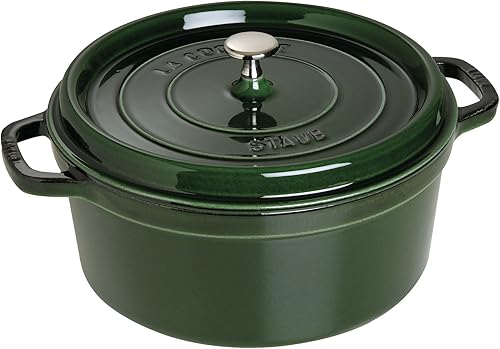
| Staub 7 Qt Round Cocotte | frequent braising | 7 qt | Matte black enamel | 900°F without lid; lid to 500°F | 8.0 |
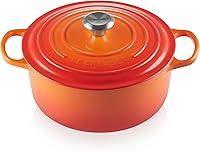
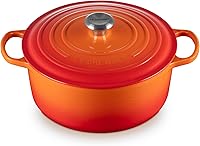
| Le Creuset 7.25 Qt Round Dutch Oven | monitoring browning | 7.25 qt | Light colored smooth enamel | 500°F | 8.3 |
Choose around the task you repeat most often. A visible cooking surface helps with judging browned bits, while Staub's interior and lid combination appeals to cooks whose routine centers on searing meat and simmering it under cover.
Neither pot needs to win every category to be right for your kitchen. An unusually high heat limit has little value if your recipes use moderate oven temperatures and a closed lid.
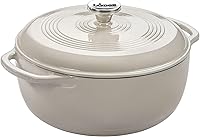
If your main question is value, read whether Le Creuset Dutch ovens are worth it. Our Lodge vs Le Creuset comparison offers another route if you're still choosing between brands.
Which interior helps you judge browning?
Le Creuset makes browning easier to see, while Staub offers a matte black enamel surface that the brand says promotes browning. Your preference should depend on the cooking cues you find easiest to follow.
Staub vs Le Creuset interiors: choose your cooking cues
A light cooking surface gives browned bits a clear background. That helps when you're deciding whether to add liquid, lower the heat or stop cooking garlic before it gets too dark.
Staub's darker surface calls for more attention to the food itself. Watch its color, notice changes in smell and check whether meat releases with gentle pressure before trying to turn it.
Choose Le Creuset if you're learning to build a pan sauce or want to watch pale ingredients change color. Choose Staub if you're comfortable using several cues and prefer its textured finish.
Browning technique matters with either pot
Dry ingredients and enough room between pieces help moisture escape so food can brown. Crowding a large pot can still trap steam, especially when meat or vegetables release liquid.
Work in batches when needed, and let the pot recover some heat between them. Once you've built a brown layer on the bottom, add your recipe's liquid and loosen it gently with a wooden or silicone utensil.
Neither interior makes high burner heat necessary. Cast iron holds heat well, so give each adjustment time to take effect before turning the burner higher.
Which lid suits braises, stews and sauces?
Both lids suit covered cooking, and Staub's interior spikes give condensed moisture a path back onto the food. Le Creuset's tight-fitting lid is also designed to circulate steam and return moisture.
Staub is a sensible choice if covered braises are a weekly habit and that lid design appeals to you. There is no need to choose it for the lid alone if you spend more time cooking uncovered sauces.
For a braise, follow the recipe's liquid level rather than covering every ingredient by default. A heavy lid helps retain moisture, but meat fully submerged in excess liquid cooks differently from a partly submerged braise.
Keep the liquid at a gentle simmer. A hard boil can break apart tender ingredients and reduce liquid faster than intended, even with a lid in place.
Remove the lid when you need to reduce a thin sauce. Moisture retention helps during a long covered cook; evaporation helps when the finished dish needs more body.
Does the oven limit change the buying decision?
Staub's higher limit matters only for uncovered cooking above 500°F. Its pot can go to 900°F without the lid, but the lid stops at 500°F, which is also Le Creuset's oven limit.
For ordinary covered braises, this leaves both with the same temperature ceiling. Buy Staub for that extra range only if you have a specific uncovered recipe or cooking method that needs it.
A maximum temperature is a limit, not a recommended setting. Higher heat won't automatically improve a stew, roast or loaf, and the recipe still needs to suit enameled cast iron.
Bread bakers should pay special attention to instructions about empty preheating. Follow the cookware's care guidance rather than assuming every method written for bare cast iron also suits enamel.
Check oven clearance with the lid attached before cooking. You need room to grip the pot safely and remove it without brushing the hot lid against the rack above.
Is either Dutch oven the right size for your meals?
Both belong in the large-batch category, with Staub at 7 qt and Le Creuset at 7.25 qt. The extra quarter quart is too small to drive this decision for most households.
These sizes make sense for big soups, family braises and meals planned around leftovers. They are less appealing when you usually cook a small portion and want quick washing and compact storage.
A small amount of sauce spreads thinly across a large pot's base. It can reduce faster than expected, so a recipe written for a smaller vessel may need closer attention.
Leave working space above soups and stews for stirring and bubbling. Nominal capacity is not a useful target for how full a pot should be during cooking.
Our Dutch oven size guide helps you choose a size class first. If you favor Le Creuset but want a different capacity, use the Le Creuset Dutch oven size guide.
Which pot is easier to lift and store?
Le Creuset has the lower stated empty weight, at 6.1 kg, or about 13.4 lb, compared with Staub's 15.2 lb. Both become much heavier once you add food.
Le Creuset's handles and knob are designed for easy lifting, but your grip and reach still matter. Imagine moving a full pot out of a low oven rather than judging handling only on a countertop.
Use dry oven mitts and both handles when moving hot cookware. Clear the route to a heat-safe landing spot before you lift, and avoid carrying a full pot farther than necessary.
If lifting the meal feels difficult, serve portions where the pot sits safely and move the cookware after it cools. Don't choose either large model if handling a full batch would regularly be a strain.
Store it where you can lift it without reaching overhead or twisting. A pot that requires moving several other heavy items before every meal is less likely to become useful everyday cookware.
Do induction and glass cooktops favor either brand?
Both work on induction and other common cooktops, so compatibility does not settle this comparison. Staub has a smooth enamel bottom, and Le Creuset is compatible with all cooktops.
Choose a burner or induction zone that suits the pot's base, following your cooktop manual. A small burner under a large pot can make heat control less even across the cooking surface.
Lift the pot when repositioning it on glass, and keep the base and cooktop free of trapped grit. A smooth bottom still needs careful handling.
Warm either pot gradually rather than starting with an induction boost setting. For burner sizing and daily handling, see our guide to using a Dutch oven on induction.
How should you set up and cook your first meal?
Start with a forgiving soup or braise, so you can learn heat control without managing several delicate steps. Wash and dry the cookware first, then read the included care instructions before heating it.
Le Creuset requires no seasoning. Staub's matte interior is also enamel, so don't treat its dark appearance as a bare cast iron surface that needs a seasoning layer.
Prepare ingredients before turning on the burner. Chopped vegetables, measured liquid and a clear place for browned meat make it easier to control the pot instead of leaving it heating while you search for supplies.
Warm gradually, add the recipe's cooking fat as directed and watch for signs that it's ready. Add ingredients before the fat smokes, and adjust the heat if browning moves too quickly.
When adding liquid after searing, pour carefully to manage steam and splatter. Avoid pouring cold liquid into a very hot, empty pot, and don't set hot cookware on a cold or wet surface.
Once the food reaches a simmer, reduce the heat to maintain it. Our guide to using a Dutch oven for the first time explains the basic cooking sequence.
How should you clean and protect the enamel?
Hand washing is a practical routine for both, even though both are dishwasher-safe and Staub specifically recommends washing by hand. Let the cookware cool before cleaning.
Use warm water, dish soap and a soft sponge for ordinary residue. Soak stuck food rather than attacking it with a knife, metal scraper or harsh abrasive.
A dark interior can make residue harder to spot. Check the surface by touch once it's cool and clean, especially around the bottom edge where food can collect.
A light interior makes discoloration easier to see, but color alone doesn't mean food is still stuck. Focus on removing residue without trying to scrub the enamel back to a uniform shade after every meal.
Dry the pot and lid before storage, and avoid banging utensils against the rim. If stacking cookware, place a soft protective layer between pieces.
For specific cleaning steps, see how to clean an enameled Dutch oven. Our enameled cast iron Dutch oven buying guide explains how the material affects daily use.
What mistakes should you avoid before buying?
Don't let brand preference replace a check of size, handling and cooking habits. Those practical limits affect every meal more than a small difference in capacity.
Buying for an occasional holiday dish can leave you with an awkward everyday pot. Choose around your normal batch first, then decide how much extra room you truly need for guests.
Don't expect a premium Dutch oven to make stirring, heat control or batch browning optional. Either can scorch food if you leave a thick sauce over excessive heat.
Avoid choosing Staub solely because its uncovered oven limit is higher. If your cooking stays below the shared covered limit, the interior and handling deserve more attention.
Likewise, don't choose Le Creuset just for the extra capacity. Its clearer cooking surface is a stronger reason to prefer it.
If you're still unsure which features matter for your meals, how to choose a Dutch oven helps turn your recipe habits into a buying checklist.
Staub vs Le Creuset: the decision for your kitchen
Pick Staub for a braising routine built around searing, adding liquid and cooking under cover. Its matte interior and spiked lid make sense for cooks who prefer those features and can comfortably manage the weight.
Pick Le Creuset if seeing the cooking surface clearly will help you cook with more confidence. It is the stronger choice here for watching browned bits, judging sauce color and learning when to move to the next step.
Skip both sizes if you mainly cook small meals, have cramped storage or struggle with heavy cookware. A large Dutch oven earns its space through regular batches, not the brand name on its lid.
Before you order, choose one meal you make often and picture the full process, from browning to washing. If capacity remains the sticking point in your Staub vs Le Creuset decision, start with our Dutch oven size guide.
Frequently asked questions
Is Staub or Le Creuset better for a Dutch oven?
Le Creuset is the more useful choice if you want a light interior for watching browning and sauce color; Staub suits cooks who prefer a matte cooking surface and a spiked lid for covered braises. Choose around those daily differences, then make sure you can comfortably handle a large, filled pot.
Which Dutch oven has the higher oven limit?
Staub has the higher uncovered limit: its pot is oven-safe up to 900°F without the lid, while its lid is limited to 500°F; Le Creuset is oven-safe up to 500°F. For a covered recipe, both therefore have the same ceiling, and ordinary braising rarely needs heat near that limit.
Do Staub and Le Creuset Dutch ovens work on induction?
Both work on induction, so cooktop compatibility doesn't favor either one here; match the pot to a suitable cooking zone, warm it gradually and lift it rather than sliding it across the glass. Check your cooktop manual for cookware size guidance before choosing a large Dutch oven.
Is Staub's dark interior harder to cook with?
Staub's dark interior makes browned residue less visible than Le Creuset's light enamel, so you'll rely more on food color, smell and how easily food releases; that suits cooks comfortable with those cues. Choose Le Creuset if you want a clearer view while learning to sear or build a pan sauce.
How do I choose between the 7 qt and 7.25 qt sizes?
Treat these as the same general size class rather than choosing around the extra quarter quart; both suit large recipes and planned leftovers, but either can feel bulky for small meals. Check your usual recipe's pot requirement, available storage and ability to lift the pot with food inside.